by SXHH Marketing | Oct 5, 2021 | Hormone Replacement Therapy, Menopause, Wellness
Low estrogen levels during menopause may put you at risk for type 2 diabetes. Hormone changes during menopause can cause a lot of worrisome and frustrating changes, from disrupting symptoms to higher risks for certain health conditions. Diabetes is a common but serious condition that can impact your overall wellbeing, and estrogen may play a role in your risk factors for this health condition. In this article, we’ll explore the connection between estrogen and diabetes.
Low Estrogen During Menopause May Affect Your Health

Low estrogen can cause many symptoms and health risks, but treatment solutions are available from our providers.
Menopause is a natural stage of life for women, but that doesn’t mean it comes without any risks. Unfortunately, declining and fluctuating hormones during menopause can lead to many symptoms and health risks.
For instance, some of the symptoms you may experience because of low estrogen and progesterone during menopause include:
- Mood changes
- Hot flashes
- Night sweats
- Vaginal dryness
- Sleep problems
- Weight gain
- Brain fog
Each of these symptoms can affect your physical, emotional, and mental wellbeing. Many believe hormone levels are the cause of menopause symptoms.
Decreased estrogen can also affect your health in many different ways. After menopause, your risk increases for many health conditions. Some of these include heart disease, osteoporosis, and type 2 diabetes. Let’s look at how estrogen affects your risks for diabetes after menopause.
Low Estrogen May Increase Your Risk for Developing Type 2 Diabetes
What many women don’t realize is that their risk for type 2 diabetes increases after menopause. Everyone’s risk for diabetes goes up with age, regardless of gender. However, women may be more at risk for diabetes after menopause. Researchers have theorized for years that hormone changes during menopause may play a role in that risk. Several studies suggest there may be a link between type 2 diabetes and low estrogen levels. There may be several factors at play in the connection between estrogen and diabetes. Research is still ongoing, but there are some potential explanations backed by scientific study.
Estrogen May Affect How Your Body Uses Insulin
Diabetes is a condition where your blood sugar is too high. With type 2 diabetes, this is typically because your body makes less insulin and because your cells become more resistant to insulin. Insulin is a hormone that helps your cells use sugar, but if your cells are more insulin resistant, glucose (sugar) may stay in the blood unused for energy instead. Recent research led by a team from Texas A&M University found that estrogen may affect how your body responds to insulin.
Several studies have found a potential link between low estrogen and type 2 diabetes. Yet, many couldn’t explain why. The researchers found this may be due to estrogen’s effects on liver-specific FOXO1. FOXO1 is a protein that basically binds to DNA and helps turn certain genes on or off. This particular protein helps your body regulate insulin to control blood sugar. Estrogen may help reduce how much sugar your body produces by acting on this protein. As your estrogen levels decline during menopause, FOXO1 proteins may not work as effectively to control insulin levels, which may explain the increased risk for type 2 diabetes after menopause.
Estrogen & Glucagon
However, there may be other explanations behind why the risk for type 2 diabetes increases after menopause. For example, another study found that estrogen may actually target certain cells in your body that may help reduce diabetes risks. The researchers in this study found that estrogen may act on cells in the pancreas and gut that help improve your ability to use glucose. Some of the cells studied release a hormone called glucagon. Glucagon helps increase blood sugar to help prevent it from dropping too low, such as while you sleep, to help prevent hypoglycemia (low blood sugar). However, if your body releases too much glucagon, you may have chronically high blood sugar levels, which can lead to diabetes.
The study actually found that estrogen affects the cells responsible for making and releasing glucagon. They saw estrogen helped reduce glucagon production and increased GCP1 levels, which help increase insulin in your body, block glucagon secretion, and can also help you feel full. This is another way estrogen may help keep blood sugar levels in check and reduce the risks of type 2 diabetes. However, since estrogen levels decline during menopause, women may lose some of this protection against high glucagon levels.
Low Estrogen May Increase Visceral Fat in Your Body
You may know that obesity is a common risk factor for developing type 2 diabetes. However, many don’t realize that how fat is distributed in your body may also play a role in your risk for diabetes. For instance, some researchers believe that large amounts of visceral fat increases the risk for metabolic syndrome, which can cause insulin resistance and type 2 diabetes. Visceral fat is fat found in the abdominal cavity around your organs like the stomach, liver, and intestines. You might be wondering what this has to do with hormones and menopause. Well, lower estrogen levels after menopause can affect how fat is distributed in your body. You may have more visceral fat if you have decreased estrogen levels, increasing the risk for diabetes and many other health conditions.
Gaining more visceral fat doesn’t even necessarily mean that you gain weight. Hormone changes during menopause may simply affect how your body distributes fat. So, even if you don’t gain weight, you may find that you have more visceral fat after menopause, which can also increase your risk for diabetes.
Other Symptoms that Affect Your Blood Sugar
In addition, several of the symptoms of menopause can affect your blood sugar, which may increase your risk for type 2 diabetes. For instance, many women gain weight during menopause. Being overweight or obese can raise your risk for developing type 2 diabetes, as it can make you more resistant to insulin.
Poor sleep is another symptom many women experience during menopause that may affect your diabetes risks. Sleep deprivation from issues like insomnia or sleep disturbances from night sweats can negatively affect your blood sugar levels.
Therefore, there may be several different factors that affect your diabetes risk during menopause. Some of the symptoms you might experience during menopause may indirectly affect your risks.
Can Hormone Imbalance Treatment Help Reduce Diabetes Risk?
Fortunately, evidence suggests that hormone replacement therapy (HRT) during menopause may help reduce risks for diabetes. Several studies have looked at the effects of hormone replacement on diabetes risk with positive results.
HRT is a type of treatment many women use for symptoms of menopause. This treatment helps supplement your hormone levels as they start to decline during menopause. Generally, menopausal hormone therapy includes estrogen and progesterone, though women who have had a hysterectomy may only need estrogen. The goal of hormone therapy is to keep your hormone levels in ranges that help reduce menopause symptoms.
Another potential benefit of using HRT after menopause is that it may help reduce your risk for developing type 2 diabetes. Several studies suggest that estrogen or combination therapy may actually help prevent diabetes and also help with glycemic control. While most medical professionals recommend using HRT only if you have troubling menopause symptoms, reduced risk of type 2 diabetes may be a secondary benefit for some women. Our treatment providers can help you weigh the benefits and risks and help you decide if hormone imbalance treatment is right for you.
Quality Care and HRT Solutions for Women at HerKare
When you need holistic healthcare solutions, visit a HerKare clinic near you. We provide quality care for women at every stage of life. Whether you’re interested in discussing hormone therapy options for menopause or need preventative well woman care, our team is here to help. Our goal is to help you feel your best and help you prioritize your lifelong health. Make an appointment today to learn how our providers can help you address your health and wellness.

by SXHH Marketing | Sep 27, 2021 | Wellness
The CDC estimates that over 73% of American adults are overweight. Most of us have heard of the many risks of being overweight, such as an increased risk for heart disease, diabetes, and even certain cancers. Carrying around extra pounds can also affect how many people feel about themselves, causing low self-esteem and other issues. If you’re ready to start your weight loss journey, you might wonder if there’s anything that can help you lose weight and shed fat. Lipotropic injections might be just the answer.
What are Lipotropic Injections?

The vitamins and amino acids in lipotropic injections may help with your weight loss strategies.
Lipotropic injections are a mix of vitamins and amino acids delivered by injection. This blend of vitamins and amino acids may help with weight loss. In most cases, lipotropic injections include a mix of B vitamins and amino acids that may help improve metabolism, energy, and the breakdown of fat in your body. The base for lipotropic injections is vitamin B12, which is an important vitamin for energy and metabolism.
While research is still ongoing for lipotropic injections and weight loss, many patients notice positive results after beginning a lipotropic injection treatment plan. Our providers generally recommend one injection each week for 12 weeks. It’s important to discuss the specifics of your situation with one of our treatment providers before beginning lipotropic injections.
How do Lipotropic Injections Work?
Of course, many of us have fallen for weight loss scams that promise amazing results with little delivery. So, what makes lipotropic injections different? For starters, unlike the products we just described, these treatments are overseen by treatment providers at our clinics.
Studies have found an association between certain vitamin deficiencies and being overweight. For instance, some research indicates that low B12 may increase the risk for obesity. Therefore, some researchers theorize that boosting these common deficiencies may help decrease risk factors for being overweight.
In addition, while research continues for lipotropic shots, evidence suggests that the ingredients in lipotropic injections may help increase metabolism and energy levels, both of which can be beneficial for weight loss.
Increasing Metabolism
One of the ways lipotropic injections may help with your weight loss goals is increasing metabolism. Specifically, the ingredients in lipotropic shots may help improve fat metabolism in the liver. These vitamins and amino acids may help the liver remove fat from the body, turn fat into energy, and also reduce fat production. Essentially, in some cases if your body doesn’t have the vitamins and amino acids it needs, the liver may not be very effective at processing fat from your diet. This can lead to unnecessary fat storage, which can increase weight and body fat percentage. Lipotropic injections can help improve this fat metabolism in the liver, which may aid with weight loss.
Boosting Energy Levels
Also, some people notice they have more energy after beginning lipotropic injection treatments. This is important, as when you’re dealing with low energy levels and fatigue, it can be hard to follow a lifestyle that promotes healthy weight.
Think about the last time you had less-than-stellar sleep at night. It likely felt like you were dragging yourself through the day. You might have reached for some sweets or comfort foods to help keep you going. Also, you likely didn’t work out that day (or not as much as you had planned) because you felt tired.
When we’re tired and have no energy, it can feel almost impossible to eat right and exercise. Many people unconsciously grab for foods that aren’t as healthy for one reason or another. For instance, you might be more likely to eat processed foods rather than cook a healthy meal from scratch because of the energy needed for cooking. In addition, sometimes our bodies crave sugar or carbohydrates for a quick energy source when we’re feeling drained. If this is a frequent occurrence, it might sabotage your weight loss goals. And let’s not even mention how hard it is to exercise regularly and to the proper intensity for weight loss if you feel exhausted all the time.
Fortunately, many of the vitamins and amino acids in lipotropic injections can actually help boost energy levels. For instance, one of the main ingredients in lipotropic injections is vitamin B12, which is also known by some as “the energy vitamin.” Boosting energy can make it easier to follow your weight loss plan.
Using Lipotropic Shots for Weight Loss
If you’re interested in beginning lipotropic injections for weight loss, the first step is scheduling an appointment to talk with one of our treatment providers. They can help you understand what you need to do for treatment, potential side effects, and discuss the treatments more in-depth based on your individual circumstances.
It’s also important to understand that lipotropic injections aren’t a substitute for weight loss strategies. These treatments may aid with your weight loss journey. They may help you burn fat easier and faster. However, it’s still important to follow a weight management program. You can talk to one of our doctors about your weight and recommended weight loss strategies based on your health and lifestyle.
Pairing Lipotropic Injections with Weight Loss Strategies
In most cases, if you’re taking lipotropic injections, you’ll need to follow weight loss programs for optimal results. Once again, this may vary depending on your personal situation. However, for most healthy adults, losing weight the healthy way includes exercising and eating a balanced diet. The CDC states that people who lose weight gradually are often more successful at maintaining a healthy weight after achieving their weight loss goals. For most people, this means aiming to lose one to two pounds a week.
Therefore, if you’re interested in beginning lipotropic injection treatments, it’s important to understand that these injections won’t do all the work for you. Instead, make sure you have a healthy weight goal in mind and a plan to achieve it. Lipotropic injections may help you burn fat when paired with weight management programs.
Are there Other Benefits of Lipotropic Injections?
Most people who start lipotropic injections primarily do so to help with weight loss and to help jump start fat burning. However, there are some other benefits you might notice after beginning this treatment. In addition to the benefits we’ve already mentioned (helping improve metabolism and energy), lipotropic injections may also:
- Boost memory and focus
- Improve mood
- Reduce water retention
- Improve liver detoxification
- Promote healthy hair, skin, and nails
Therefore, if you’re interested in lipotropic injection therapy, talk to one of our treatment providers to learn more and discuss your individual circumstances.
Weight Loss Strategies from HerKare Women’s Health Clinic
Our team at HerKare is here to help women improve their health. We believe in empowering women through quality healthcare. Whether you’re looking for lipotropic shots to help aid weight loss or need preventative well woman care, we’re here to help. Our team is here to help provide you with friendly, comfortable care so you can be proactive about your health. Book an appointment today at our women’s health clinic owned and operated by women for women.

by SXHH Marketing | Sep 20, 2021 | Wellness
Even if you have had a hysterectomy, gynecological exams are still important! Many women don’t realize that they still need regular gynecological care even after a hysterectomy. Skipping your exams may mean skipping important health screenings and preventative care. Talk to one of our treatment providers about your situation. They recommend regular gynecological exams based on your circumstances and risks.
Summary
- After a hysterectomy, gynecological exams are still important. Many women mistakenly think they no longer need regular gynecological care after hysterectomy, but skipping exams may mean missing key health screenings and preventative care.
- Even if pap tests aren’t always needed after a complete hysterectomy, regular exams can still include cancer screenings for the vagina, vulva, and ovaries, plus other health checks such as breast exams, bone density scans, and hormone assessments. These exams are tailored to individual risks and help check for signs of infection, cysts, and other concerns.
- Gynecological exams after hysterectomy also support sexual health and pelvic organ health by monitoring symptoms like dryness or pelvic pain, helping women address any changes or discomfort with personalized care.
What’s Included in a Gynecological Exam?

Gynecological exams help you address your health, even if you have had a hysterectomy.
Before we discuss why you may still need gynecological exams after a hysterectomy, let’s talk about what a gynecological exam is. These exams address the female anatomy and reproductive system. They are an important part of regular well woman care.
Gynecological exams may be different for everyone and tailored to your individual risks. They may include a pelvic exam, a pap test, and other well woman care like general health questions and screenings. One of our treatment providers can discuss your medical history, family history, and other factors with you to determine appropriate screenings and exams during a gynecological exam.
Pelvic Exam
A pelvic exam involves a few different steps to assess the health of your pelvic organs. The exam may start with an external exam of the vulva, vagina, and surrounding area. This can help detect visual signs of things like cysts, abnormal discharge, irritation, and other potential gynecological issues. The doctor may also look for signs of warts or potentially cancerous skin growths.
The pelvic exam may also include a manual exam where your provider will put one or two gloved and lubricated fingers into your vagina and press on your abdomen with their other hand. This can help assess a few things, such as the size of your ovaries and fallopian tubes. The manual exam may help detect signs of ovarian cysts or tumors. Also, it may help assess for any pain or tenderness, which might be the result of an infection or another condition.
In addition, your pelvic exam might also include a speculum exam. The speculum is a tool made of metal or plastic that helps open the vagina. This can help allow our treatment provider to see the walls of your vagina and the cervix (if you still have a cervix after a partial hysterectomy). During the speculum portion of the pelvic exam, your provider may also take samples of discharge from your cervix. This can help with testing for things like sexually transmitted infections. In addition, they may also take samples of cervical cells for a pap test or HPV test.
Pap Test
A pap test is a screening used to look for signs of cervical cancer. The test involves collecting cells from your cervix and analyzing them in the lab for abnormalities. Abnormal cervical cells can be one of the first signs of cancer or precancerous cells. In some cases the doctor may also use the same sample from the pap test to perform an HPV test to look for the HPV virus, which can increase the risk for cervical cancer.
In some cases, you may not need pap tests after a hysterectomy. For instance, if you have had a complete hysterectomy (where the surgeon removed both the uterus and the cervix) for reasons not related to cancer and you have a history of normal pap tests, then you may not need to continue getting pap tests. This is a conversation you can have with one of our providers based on your health, history, and risk factors.
Other Healthcare Screenings
Depending on your unique circumstances, your gynecological exam may also include other screenings. For instance, our providers may recommend a breast exam, bone density screening, and other tests to address your health.
Breast exams can help screen for breast cancer. The doctor feels the breast and may do a visual exam to look for changes in the breast tissue and skin. For example, lumps or abnormal discharge that might point to breast cancer. For women over 45 years old, most doctors recommend regular mammograms to screen for signs of breast cancer as well. In some cases a mammogram may require a separate appointment from your annual gynecological exam.
Our providers may also recommend other health exams or screenings when you come in for a gynecological exam. These may be based on your individual circumstances and risks. For example, they may recommend bone density scans to look for early signs or risk factors of osteoporosis. Other screenings might include cholesterol screenings, hormone level tests, or body composition assessments to help you address your health as a whole.
Why Do I Still Need a Gynecological Exam After a Hysterectomy?
A hysterectomy is a surgical procedure that removes all or part of the uterus. There are a few different types of hysterectomy procedures. Depending on the type of hysterectomy, the surgeon may also remove the cervix, ovaries, fallopian tubes, the upper part of the vagina, and nearby lymph nodes. It’s a common misconception that women who have had a hysterectomy no longer need gynecological exams. However, regular pelvic exams are still an important part of preventative care for many women, even if they no longer have a uterus.
Cancer Screenings
One important reason to talk to your doctor about whether you need regular gynecological exams is because providers may perform several cancer screenings during the exam. Even if you no longer need a pap test after a hysterectomy to look for signs of cervical cancer, our providers may perform other cancer screenings during a gynecological exam. For instance, providers may look for signs of cancer on the vagina, vulva, ovaries, and other organs. While a hysterectomy can decrease your risk for some types of cancer, you may still need regular screenings. For instance, even if your ovaries were removed, there is a small chance that leftover ovarian cells could become cancerous after the hysterectomy.
Sexual Health
Another reason our treatment providers may recommend regular gynecological exams after a hysterectomy is to help monitor your sexual health. This may include treatment plans for vaginal dryness that makes intercourse uncomfortable, regular testing for sexually transmitted diseases, and other care to help you have a safe, healthy, and enjoyable sex life.
Screenings for Pelvic Organs
Gynecological exams also check many other pelvic organs, such as the bladder, rectum, and other organs in the pelvic area. Gynecological exams may be part of a multifaceted strategy for checking pelvic organ health. One common condition that your treatment provider may detect during a gynecological exam is pelvic organ prolapse, where the pelvic floor weakens and allows the pelvic organs to slip down and bulge into the vagina.
Some Symptoms that May Warrant a Gynecological Exam
In addition to regular well woman appointments with gynecological screenings, you may also need to schedule an appointment for a gynecological exam due to symptoms you experience. Some of these symptoms may be signs of a health condition, so our providers may recommend a gynecological exam to help identify underlying causes of your symptoms and to help rule out other health issues. Some symptoms to talk to our medical providers about include:
- Abnormal bleeding
- Abnormal discharge
- Pelvic pain
- Vaginal odor
- Vaginal soreness, itching, or irritation
- Sores in the genital area
- Urinary symptoms
Healthcare At Every Stage of Life from HerKare
As a clinic operated by women for women, our team at HerKare is here to offer compassionate care at every stage of life. Whether you need regular well woman exams and birth control management or are wondering what types of exams you need after menopause, we are here to help. Our goal is to help empower you to prioritize your health by providing quality health care and a team that listens. Book an appointment now to discuss your health with our providers!

by SXHH Marketing | Aug 27, 2021 | Hormone Replacement Therapy, Menopause, Wellness
Birth control is something many women take to prevent pregnancy and help with other conditions. However, as you enter perimenopause, you might have some questions about birth control. Our providers are here to answer your questions and help you make decisions about your health before, during, and after perimenopause. It’s important to discuss the particulars of your situation with one of our medical providers. However, we do have a general guide to help answer some common questions about birth control and perimenopause.
Summary
- Perimenopause is the transition period before menopause when hormone levels begin to fluctuate. It typically starts in women in their 40s but can begin earlier and last several years. Menopause is officially diagnosed after 12 consecutive months without a menstrual period.
- Yes, pregnancy is still possible during perimenopause because ovulation can continue even when periods become irregular. Because of this, many healthcare providers recommend continuing contraception until menopause is confirmed. This usually means waiting until a full year has passed without a period.
- Hormonal birth control can sometimes mask the symptoms of perimenopause. Birth control that contains estrogen and progesterone regulate hormone levels and may produce withdrawal bleeding that looks like a normal menstrual cycle. This can make it harder to know when natural menopause has occurred. As a result, some women may not realize they have entered menopause while still using birth control.
- In some cases, hormonal birth control may help reduce perimenopause symptoms. Some providers will prescribe birth control to regulate cycles and improve some symptoms in the transition to menopause. But the best option depends on a multitude of factors.
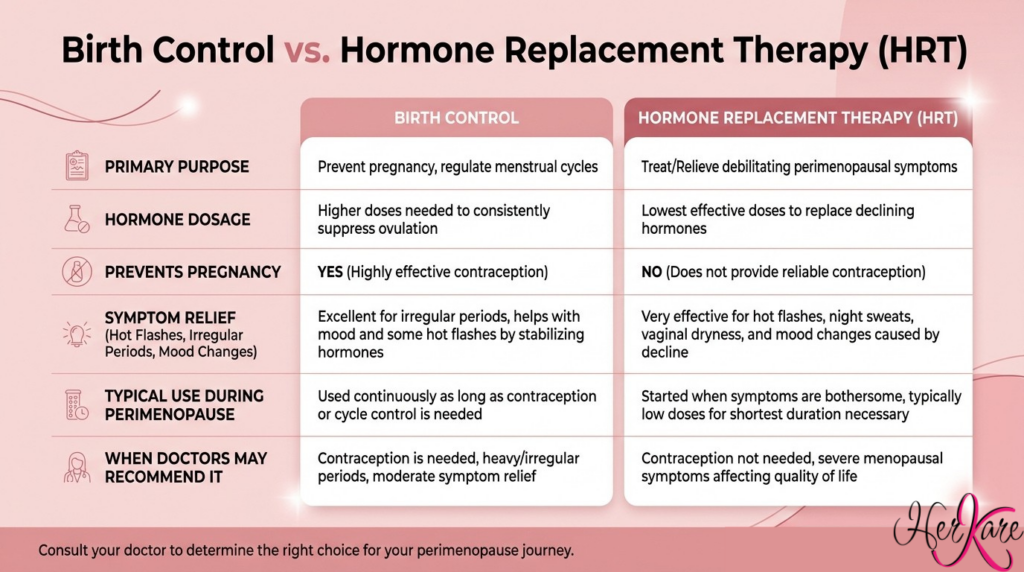
- Birth control is designed to prevent pregnancy and typically contain higher amounts of hormone levels to suppress ovulation. Menopause hormone therapy is intended to relieve symptoms such as hot flashes and unrestful sleep. Hormone replacement therapy usually contains lower hormone doses than birth control. At HerKare, a provider can help you determine which option is best for you during perimenopause.

You may still need birth control during perimenopause to prevent pregnancy.
What is Perimenopause?
First, let’s clarify what we mean by “perimenopause.” The terms perimenopause and menopause are often used synonymously, but they are actually different stages of your life. Perimenopause is the time leading up to menopause. Menopause is when you have gone 12 consecutive months without a period.
During perimenopause, your hormones may start to fluctuate more, but you’re still producing a fair amount of both estrogen and progesterone. When you reach menopause and postmenopause, your ovaries produce very little of these hormones and stop releasing eggs. Perimenopause typically begins in your 40s. It usually lasts around four years before you reach menopause. However, this can be longer or shorter for different women, even up to 10 years or more. The average age for menopause is 51 years old, though it can come earlier or later.
Symptoms of Perimenopause
There are many symptoms that can point to perimenopause. While there is no one test or sign that you’ve started perimenopause, some symptoms can signal that you may be in perimenopause.
Some symptoms of perimenopause include:
- Irregular periods
- Fatigue
- Spotting or breakthrough bleeding
- Breast tenderness
- Headaches
- Low libido
- Difficulty concentrating (“brain fog”)
- Hot flashes
- Night sweats
- Vaginal dryness
- Mood changes
If you’re dealing with these symptoms, then it may mean that you’re starting the transition to menopause. You can talk to one of our treatment providers about your symptoms to determine whether you might be in perimenopause and how we may be able to help reduce or relieve your symptoms.
Can You Still Get Pregnant During Perimenopause?
Now, it’s a common misconception that you can’t get pregnant during perimenopause. This is incorrect. You can absolutely still get pregnant during perimenopause. Your body typically still ovulates during perimenopause. While periods might be irregular or different during perimenopause, pregnancy is still a risk with unprotected sex. Therefore, many women still need contraception in the years leading up to menopause if they don’t wish to become pregnant. The risk of becoming pregnant generally doesn’t go away until after you’ve reached menopause, one year after your last period. Hormonal birth control is one of the most common forms of contraception, so many women continue to take these medications up until they reach menopause.
Birth Control May Mask Symptoms of Perimenopause
It’s important to note that hormonal birth control, like the pill, can actually mask symptoms of perimenopause and menopause. Hormonal birth control uses synthetic versions of female hormones estrogen and progesterone, which control menstruation, pregnancy, and more. Hormonal birth control can help regulate hormone levels to control periods and reduce the risk of pregnancy.
Symptoms of perimenopause and menopause are typically caused by fluctuating and declining levels of estrogen and progesterone in your body. Therefore, if you’re taking hormonal birth control, it may mask some of the symptoms of perimenopause by replacing your natural hormones with synthetic versions. Your symptoms may not be as noticeable if you’re still on hormonal birth control when you start perimenopause.
Also, many women who do experience symptoms may not associate them with perimenopause, as birth control side effects can be very similar to perimenopause. For instance, changes in mood and sex drive can be side effects of birth control and symptoms of perimenopause.
Even after menopause where your ovaries stop producing estrogen and progesterone, birth control can make it appear that you are getting regular periods. When taking combination birth control with both estrogen and progesterone, you may experience withdrawal bleeding that mimics your period, even though you’ve reached menopause.
Hormonal Birth Control May Help Reduce Symptoms during Perimenopause
In a similar vein, some women notice that their perimenopause symptoms get better after beginning hormonal birth control. Some doctors may even prescribe birth control during perimenopause to help with symptoms even if you’re not looking for a contraceptive. Of course, this depends on your individual circumstances. Some women may not benefit from birth control during menopause, and for some the risks outweigh the benefits. However, the hormones in birth control may help some women feel better during perimenopause.
As you transition into menopause, your hormone levels may fluctuate quite a bit. This can cause many symptoms that affect your quality of life, such as hot flashes and mood changes. Birth control can help regulate your hormones to reduce these fluctuations. This may, in turn, help alleviate some of your perimenopause symptoms.
How to Know if You’ve Transitioned to Menopause while On Birth Control?
So, if you take birth control during perimenopause and it can mask symptoms and even cause bleeding that mimics a normal menstrual period, how do you know if you’ve reached menopause? In most cases, stopping birth control can help you determine if you have reached menopause. Just keep in mind that until you are sure you have gone for one year without a period, you may need other forms of contraception, such as condoms, to help prevent pregnancy. Even if you have gone several months without a period, you may still be perimenopausal and still able to get pregnant. Talk to one of our treatment providers about your specific circumstances.
When Should Perimenopausal Women Stop Taking Birth Control?
You might be wondering if there is a certain time you should stop taking birth control after you enter perimenopause. Once again, this is personal, so it’s important to discuss the specifics with one of our treatment providers.
However, many doctors do recommend some women stop birth control at the average age of menopause (51 years old) to determine if they’ve reached menopause yet. Also, it’s important to understand that with age, the risks of birth control can get higher. For instance, some hormonal birth controls can increase your risk for blood clots, stroke, breast cancer, heart attacks, and other health conditions. Therefore, our treatment providers may recommend stopping or switching hormonal birth controls based on your risks, even if you’re not in perimenopause.
What’s the Difference Between Hormone Therapy and Birth Control?
You may have heard of women taking hormone therapy during and after perimenopause. If birth control typically contains hormones, what is the difference between birth control and hormone therapy for menopause?
Hormone therapy and birth control have different purposes and do different things in your body. Therefore, one might be better than the other for your circumstances.
Generally speaking, birth control is primarily to prevent pregnancy (though you might also use it for other things like regulating your cycle, reducing PMS symptoms, or even to help with hormonal acne). Hormonal birth control typically contains synthetic forms of estrogen and progesterone that are much stronger than you would find in the average hormone therapy medication. Also, most forms of hormonal birth control override ovarian function, meaning they tell your ovaries to take a break while they provide the hormones instead.
By contrast, hormone therapy is primarily used to help reduce symptoms of menopause. These medications help supplement what your ovaries naturally produce. HRT also typically provides much less estrogen and/or progesterone than birth control medications, providing the minimum amount needed to help with your symptoms. Hormone therapy also isn’t an effective form of contraception.
Does Birth Control Delay Menopause?
Another question you have is whether taking hormonal birth control delays menopause. After all, if you might have fewer symptoms and might continue bleeding each month while taking the pill, that certainly sounds like you’re not in menopause. However, this is another common misconception.
Birth control doesn’t stop, delay, or turn back the clock on menopause. Menopause is the end of your reproductive years, meaning your ovaries stop releasing eggs and producing as much estrogen and progesterone. As far as we know, there is nothing we can do or take to prevent menopause from happening. So, while birth control might mask the signs and symptoms, it won’t make your ovaries continue to function as they did in premenopausal years.
Comprehensive Women’s Health Care from Our Providers at HerKare
Our treatment providers at HerKare are here to help you address your health and feel your best. We can help you make important decisions around birth control, health risks, and symptom relief during and after menopause. Our team is dedicated to providing high quality women’s health care at every stage of life. Make an appointment today to learn more and discuss your health with one of our medical providers.

by SXHH Marketing | Jul 20, 2021 | Menopause, Wellness
Mammograms may not be your favorite thing to do, but they’re still an important part of women’s health care. Mammograms are special x-rays that look at the breast tissue. They can be a helpful screening tool to look for signs of breast cancer. Now, you may have a lot of questions about mammograms, including whether you still need them after menopause and what to expect. So, let’s talk about mammograms in general, why you need them, when you need them, and how they work.
Why are Mammograms Important for Women’s Health Care?

Women’s health care helps you stay healthy after menopause, so make sure you schedule mammograms and other screenings to address your health.
Why do doctors recommend getting regular mammograms? Essentially, they can help with screening and early detection of breast cancer.
Mammograms can help detect abnormalities before you can even feel them during a breast exam or experience symptoms. Early detection is important because it can help reduce risks, increase the chances of survival. It can also help open up more treatment options.
Therefore, most health experts recommend regular mammograms as an important breast cancer screening tool. Also, since mammograms can help with early detection, many insurance plans cover these screenings (though you should always check your specific policy to be certain).
What Does my Women’s Health Care Provider Look for During a Mammogram
What exactly does the radiologist look for in the mammogram images? There are many things they may be on the lookout for, including:
- Calcifications
- Masses
- Abnormal changes
Calcifications are mineral deposits in the breasts. These are pretty common and can be either benign or malignant. Things like aging, injuries, and benign cysts can all cause calcifications. However, they can also be caused by dead abnormal cells building up and becoming hard, which may be an early indication of breast cancer.
Masses include cysts and tumors. Once again, these can be fairly common and don’t necessarily mean you have breast cancer. In fact, most breast cysts and tumors are benign. However, since some can be cancerous, the radiologist will look for signs of these masses in your mammogram.
Also, if you have records of previous mammograms, the radiologist may also compare them to look for changes that might be concerning. Having these past images may help the radiologist detect changes that might require additional screenings. Therefore, if you change to a different women’s health clinic, you may want to request your records be sent to your new provider to help with this process.
Do I Still Need Mammograms After Menopause?
Now, you might wonder if you still need mammograms after menopause. The answer is typically yes.
As we mentioned, you should talk to one of our medical professionals about your personal situation. However, it’s important to understand that the risk for breast cancer increases as we age. In fact, research estimates most breast cancers are found in women who are over 50. So, mammograms are still important after menopause for most women.
Talk to a Women’s Health Care Provider about How Often to Get Mammograms After Menopause
Of course, not every woman has the same needs, even when it comes to mammograms. So, talk to one of our doctors about mammograms and how often you need one after menopause.
General mammogram guidelines for women with average breast cancer risk recommend:
- 40-44 years old: Optional annual mammograms
- 45-54 years old: Annual mammograms
- 55-75 years old: Mammograms every 1-2 years
- 75+ years old: Mammograms based on your individual health status and risks
However, these recommendations don’t fit every single woman’s individual risks, benefits, and needs. Therefore, it’s important to discuss mammograms and mammogram frequency with your health care provider based on your situation. One of our women’s health care providers can discuss your medical history, risk factors, overall health, and more to help create a personalized plan for mammogram frequency.
Your age and menopausal status may help you and our health care provider determine how often you should get mammograms. After menopause, you might be able to switch to getting mammograms every two years instead of every year. This depends on many different factors. However, some research suggests that after menopause, women tend to have slower-growing breast cancers than premenopausal women. This may mean that you can reduce mammogram frequency to every two years, though you should talk to our doctors about your risks and individual circumstances.
What to Expect During a Mammogram
If you’re going in for your first mammogram, you might feel a little nervous. Knowing what to expect can help, so let’s talk about what to expect before, during, and after your mammogram.
How to Prepare for a Mammogram at your Women’s Health Clinic
There’s not much you need to do to prepare for a mammogram after you schedule the appointment. Most women find it’s more comfortable to wear a two piece outfit that day, as you’ll have to undress from the waist up for the mammogram.
Also, it’s important not to wear deodorant, powder, lotion, or perfumes anywhere on or around the breasts the day of your mammogram. This is because these products can leave behind small particles that can show up on the mammogram and may look like calcifications or other potential concerns. Therefore, a good rule of thumb is not to apply anything to your breasts, underarms, or surrounding areas the day of your mammogram.
Now, of course, this is a routine for many women. If you forget and realize you have deodorant or other products on, just let us know during check-in. In some cases, you may be able to remove the products enough with a cleaning cloth to still go ahead with your mammogram.
During the Mammogram
The mammogram itself takes typically around 30 minutes. The mammographer will place your breast onto a plate and another plate compresses the breast to help with imaging. Some women might feel some discomfort with the compression, but speak up if you feel pain, especially if you experience severe pain. The compression lasts anywhere from a few seconds to a little less than a minute for each image. Most mammograms include at least two images for each breast.
Getting Your Results
After your mammogram, the images go to a radiologist who “reads” them. The office will typically contact you within a week to give you your results. The results might include explaining your breast density score, any areas of concern, or simply when the doctor recommends you have your next mammogram.
Getting Called Back After a Mammogram
Sometimes, you may need to come back for additional imaging, such as another mammogram, a breast ultrasound, or even a breast MRI. This is actually fairly common, with an estimated 5-15% of women getting called back for more images. So, while it might be concerning to you, try not to worry too much and work with your women’s health care provider to schedule the extra screening to learn more. Most repeat mammograms and breast images don’t detect cancer, so keep this in mind if you get called back after your mammogram.
Often, if the mammogram images aren’t clear, parts of the breasts were left out of the images, or if the radiologist sees an area that might be a concern, then they’ll recommend additional tests to look at the area more closely.
In some cases, if you have dense breasts, then your provider may also recommend additional imaging. Dense breasts are essentially breasts that have a higher ratio of breast tissue to fat. Dense breasts are fairly common, but they can make detecting issues on mammogram images a little more difficult and they also increase your risk for breast cancer. Therefore, in many cases, you may need additional tests done as part of your breast cancer screening. Your doctor will help you determine next steps based on your specific situation and risk factors.
Quality Women’s Health Care at Every Stage of Life from HerKare
Looking for a women’s health care provider that understands? We’re a women’s health clinic owned and managed by women for women. Our goal is to help you address your wellness at every stage of life. We are here to help empower you to take control of your health today. Whether you need a well woman check up or are dealing with concerning symptoms, make an appointment today to discuss your health with our medical team.

by SXHH Marketing | Jun 18, 2021 | Menopause, Wellness
Do you know your cholesterol levels? If not, it’s time to talk to our women’s health care provider about them! You may not realize, but menopause could change your cholesterol levels and put you at a higher risk for high cholesterol, which can put your health at risk. Even if your cholesterol levels have been healthy before, menopause is a critical time to get screened and talk to your doctor about strategies to help you stay healthy.

Staying healthy after menopause means knowing your cholesterol levels!
Talk to Your Women’s Health Care Provider About Your Cholesterol Levels
High cholesterol usually doesn’t cause any symptoms. It’s a silent condition, but it can put your health at risk in many different ways. So, it’s important to know whether you have high or elevated levels and learn strategies to lower them or keep them in healthy ranges.
Here are the current cholesterol screening recommendations for women with low risk:
- 20-55: Cholesterol screening every 4-6 years
- 55-65: Cholesterol screening every 1-2 years
- 65+: Cholesterol screening every year
However, if you do have certain risk factors, our women’s health care provider may recommend more frequent screenings.
Here are some general cholesterol goals for most healthy adults:
- Total cholesterol: less than 200 mg/dL
- LDL cholesterol: less than 100 mg/dL
- HDL cholesterol: more than 60 mg/dL
The key to remember is you want your LDL (bad cholesterol) levels low and your HDL (good cholesterol) levels to be high. This is because LDL sticks to and builds up in the arteries, like hair clogging a drain in your home. HDL, on the other hand, is sort of like a drain cleaner, taking cholesterol out of the bloodstream and back to the liver.
Menopause Can Increase Your Risk for High Cholesterol
If you’re going through menopause, now may be an important time to get a cholesterol test. LDL cholesterol levels tend to rise and HDL levels tend to decrease around this time. There may be a link between low estrogen levels and this cholesterol change during menopause. Other changes during this time can also contribute to the risk for high cholesterol.
How Estrogen Affects HDL Cholesterol Levels
While both men and women can have high cholesterol levels, women are more at risk later in life after menopause. This is because estrogen drops off pretty dramatically during menopause. Estrogen is a hormone that has been linked to higher HDL cholesterol levels. Remember, HDL cholesterol is the good kind, that helps remove the LDL from your arteries and back to the liver. However, lower estrogen levels after menopause can mean your HDL levels start to decline and your LDL levels start to increase. Therefore, even if you’ve never had high cholesterol levels before, these hormone changes can have a significant impact.
One study found that cholesterol levels rose dramatically anywhere from one year before to one year after the last period for women who participated in the study. That’s why it’s important to talk to your women’s health care provider about cholesterol and how to keep it in healthy ranges during and after menopause.
Why Care about Cholesterol Levels?
It’s a common misconception that only middle-aged men need to worry about cholesterol, but women are at risk for high cholesterol as well, particularly after menopause. The problem with high cholesterol is that, even though it doesn’t necessarily have any symptoms, it can cause other serious health conditions. Some of the most concerning and life-threatening are cardiovascular problems from high cholesterol.
Increases Risk for Heart Disease, Heart Attack, and Stroke
Heart disease is the leading cause of death for both men and women, especially for women after menopause. Unfortunately, cholesterol awareness is particularly low among women. One survey from the American Heart Association found that most women, about 76%, didn’t know their cholesterol levels. However, cholesterol can put your health at risk.
High cholesterol levels can increase your risk for conditions like:
- Heart disease
- Atherosclerosis (hardening of your arteries)
- High blood pressure
- Heart attack
- Stroke
The main problem with cholesterol is that it can clog your arteries. Cholesterol can become sticky plaque that sticks to the arteries and blood vessels. Over time, this can harden your arteries and make them narrower, meaning less blood can flow through them. This can make your heart work harder and even damage the heart muscle from all the overwork.
Also, the plaque can break off and cause clots that block blood flow. If the blood clot blocks blood flow to your heart, you have a heart attack. If it blocks blood to the brain, you have a stroke. Therefore, it’s incredibly important for your heart health to keep your cholesterol levels in check.
Where does Cholesterol Come From?
To understand how to keep your cholesterol levels healthy, you need to know what cholesterol is and where it comes from.
First, what is cholesterol? Cholesterol is a fatty, waxy substance in your blood. Cholesterol isn’t all bad, and you actually need it to make many different things in your body, like bile, sex hormones, cortisol, and vitamin D.
Since cholesterol is so necessary for many different processes in your body, your liver actually makes most of the cholesterol you need. About 80% of cholesterol comes from your liver. The other 20% of cholesterol comes from your diet.
It’s a common misconception that dietary cholesterol increases your blood cholesterol levels. This isn’t necessarily the case. Actually, dietary cholesterol is unlikely to significantly increase your risks for high cholesterol. However, trans fats and saturated fats certainly can.
Some things that play a role in your risks for high cholesterol include:
- Genetics
- Diet
- Age
- Activity level
Why Get Regular Cholesterol Screenings from your Women’s Health Clinic?
Getting your cholesterol tested is a simple blood test we perform at our women’s health clinic. Our team can check your cholesterol levels as part of your annual health exam. We can also talk about strategies for keeping your cholesterol levels healthy. Even if you don’t have high or elevated levels, we can talk about things you can do to keep them low.
If you do have unhealthy cholesterol levels, we’ll work with you to create a treatment plan to help you stay healthy and reduce your risks. So, make sure you get regular cholesterol screenings as part of taking care of your overall health.
Treatment Solutions for High Cholesterol After Menopause
If you do have high cholesterol levels after menopause, our women’s health care team can help you find treatment solutions for how to lower cholesterol. Treatment for high cholesterol can look different for different people, and it all depends on your specific situation.
For instance, some women are able to lower cholesterol with diet and lifestyle changes, like cutting out trans and saturated fats and increasing how much they exercise. In other cases, you may need medications to help lower your cholesterol. Many women require all of these strategies. Our medical professionals will work with you to personalize your treatment and help you reduce health risks from high cholesterol.
Quality Women’s Health Care to Help You Take Control of Your Health
Our team at HerKare is here to empower you by helping you take care of your health. We listen, understand, and help you take steps to improve your overall wellness. We’re with you at every stage of life to help you stay healthy and help you feel great. Whether you have a specific health concern or just need a checkup to get necessary screenings to help with early detection of serious conditions, our team is here for you. Make an appointment with one of our women’s health care providers today!