by SXHH Marketing | Oct 5, 2021 | Hormone Replacement Therapy, Menopause, Wellness
Low estrogen levels during menopause may put you at risk for type 2 diabetes. Hormone changes during menopause can cause a lot of worrisome and frustrating changes, from disrupting symptoms to higher risks for certain health conditions. Diabetes is a common but serious condition that can impact your overall wellbeing, and estrogen may play a role in your risk factors for this health condition. In this article, we’ll explore the connection between estrogen and diabetes.
Low Estrogen During Menopause May Affect Your Health

Low estrogen can cause many symptoms and health risks, but treatment solutions are available from our providers.
Menopause is a natural stage of life for women, but that doesn’t mean it comes without any risks. Unfortunately, declining and fluctuating hormones during menopause can lead to many symptoms and health risks.
For instance, some of the symptoms you may experience because of low estrogen and progesterone during menopause include:
- Mood changes
- Hot flashes
- Night sweats
- Vaginal dryness
- Sleep problems
- Weight gain
- Brain fog
Each of these symptoms can affect your physical, emotional, and mental wellbeing. Many believe hormone levels are the cause of menopause symptoms.
Decreased estrogen can also affect your health in many different ways. After menopause, your risk increases for many health conditions. Some of these include heart disease, osteoporosis, and type 2 diabetes. Let’s look at how estrogen affects your risks for diabetes after menopause.
Low Estrogen May Increase Your Risk for Developing Type 2 Diabetes
What many women don’t realize is that their risk for type 2 diabetes increases after menopause. Everyone’s risk for diabetes goes up with age, regardless of gender. However, women may be more at risk for diabetes after menopause. Researchers have theorized for years that hormone changes during menopause may play a role in that risk. Several studies suggest there may be a link between type 2 diabetes and low estrogen levels. There may be several factors at play in the connection between estrogen and diabetes. Research is still ongoing, but there are some potential explanations backed by scientific study.
Estrogen May Affect How Your Body Uses Insulin
Diabetes is a condition where your blood sugar is too high. With type 2 diabetes, this is typically because your body makes less insulin and because your cells become more resistant to insulin. Insulin is a hormone that helps your cells use sugar, but if your cells are more insulin resistant, glucose (sugar) may stay in the blood unused for energy instead. Recent research led by a team from Texas A&M University found that estrogen may affect how your body responds to insulin.
Several studies have found a potential link between low estrogen and type 2 diabetes. Yet, many couldn’t explain why. The researchers found this may be due to estrogen’s effects on liver-specific FOXO1. FOXO1 is a protein that basically binds to DNA and helps turn certain genes on or off. This particular protein helps your body regulate insulin to control blood sugar. Estrogen may help reduce how much sugar your body produces by acting on this protein. As your estrogen levels decline during menopause, FOXO1 proteins may not work as effectively to control insulin levels, which may explain the increased risk for type 2 diabetes after menopause.
Estrogen & Glucagon
However, there may be other explanations behind why the risk for type 2 diabetes increases after menopause. For example, another study found that estrogen may actually target certain cells in your body that may help reduce diabetes risks. The researchers in this study found that estrogen may act on cells in the pancreas and gut that help improve your ability to use glucose. Some of the cells studied release a hormone called glucagon. Glucagon helps increase blood sugar to help prevent it from dropping too low, such as while you sleep, to help prevent hypoglycemia (low blood sugar). However, if your body releases too much glucagon, you may have chronically high blood sugar levels, which can lead to diabetes.
The study actually found that estrogen affects the cells responsible for making and releasing glucagon. They saw estrogen helped reduce glucagon production and increased GCP1 levels, which help increase insulin in your body, block glucagon secretion, and can also help you feel full. This is another way estrogen may help keep blood sugar levels in check and reduce the risks of type 2 diabetes. However, since estrogen levels decline during menopause, women may lose some of this protection against high glucagon levels.
Low Estrogen May Increase Visceral Fat in Your Body
You may know that obesity is a common risk factor for developing type 2 diabetes. However, many don’t realize that how fat is distributed in your body may also play a role in your risk for diabetes. For instance, some researchers believe that large amounts of visceral fat increases the risk for metabolic syndrome, which can cause insulin resistance and type 2 diabetes. Visceral fat is fat found in the abdominal cavity around your organs like the stomach, liver, and intestines. You might be wondering what this has to do with hormones and menopause. Well, lower estrogen levels after menopause can affect how fat is distributed in your body. You may have more visceral fat if you have decreased estrogen levels, increasing the risk for diabetes and many other health conditions.
Gaining more visceral fat doesn’t even necessarily mean that you gain weight. Hormone changes during menopause may simply affect how your body distributes fat. So, even if you don’t gain weight, you may find that you have more visceral fat after menopause, which can also increase your risk for diabetes.
Other Symptoms that Affect Your Blood Sugar
In addition, several of the symptoms of menopause can affect your blood sugar, which may increase your risk for type 2 diabetes. For instance, many women gain weight during menopause. Being overweight or obese can raise your risk for developing type 2 diabetes, as it can make you more resistant to insulin.
Poor sleep is another symptom many women experience during menopause that may affect your diabetes risks. Sleep deprivation from issues like insomnia or sleep disturbances from night sweats can negatively affect your blood sugar levels.
Therefore, there may be several different factors that affect your diabetes risk during menopause. Some of the symptoms you might experience during menopause may indirectly affect your risks.
Can Hormone Imbalance Treatment Help Reduce Diabetes Risk?
Fortunately, evidence suggests that hormone replacement therapy (HRT) during menopause may help reduce risks for diabetes. Several studies have looked at the effects of hormone replacement on diabetes risk with positive results.
HRT is a type of treatment many women use for symptoms of menopause. This treatment helps supplement your hormone levels as they start to decline during menopause. Generally, menopausal hormone therapy includes estrogen and progesterone, though women who have had a hysterectomy may only need estrogen. The goal of hormone therapy is to keep your hormone levels in ranges that help reduce menopause symptoms.
Another potential benefit of using HRT after menopause is that it may help reduce your risk for developing type 2 diabetes. Several studies suggest that estrogen or combination therapy may actually help prevent diabetes and also help with glycemic control. While most medical professionals recommend using HRT only if you have troubling menopause symptoms, reduced risk of type 2 diabetes may be a secondary benefit for some women. Our treatment providers can help you weigh the benefits and risks and help you decide if hormone imbalance treatment is right for you.
Quality Care and HRT Solutions for Women at HerKare
When you need holistic healthcare solutions, visit a HerKare clinic near you. We provide quality care for women at every stage of life. Whether you’re interested in discussing hormone therapy options for menopause or need preventative well woman care, our team is here to help. Our goal is to help you feel your best and help you prioritize your lifelong health. Make an appointment today to learn how our providers can help you address your health and wellness.

by SXHH Marketing | Sep 3, 2021 | Hormone Replacement Therapy, Menopause
Hot flashes and night sweats are a serious problem for many women during perimenopause and menopause. Fortunately, there are several treatment options that may help ease your symptoms. Some new research suggests that progesterone replacement therapy may be an option to reduce the severity and number of hot flashes and night sweats for some women.

Progesterone replacement therapy can help ease hot flash symptoms so you can keep doing the things you love.
Hot flashes can cause many issues for menopausal women. They can reduce quality of life and interrupt day-to-day activities. Hot flashes at night, also known as night sweats, often make it difficult for women to get good quality sleep. Hot flashes and night sweats are some of the most common symptoms of menopause. However, there are many treatment options available! Our providers can help find personalized treatment solutions based on your symptoms and lifestyle. In some cases, this may include hormone therapy with estrogen and/or progesterone as well as lifestyle changes and other treatments.
What is Progesterone Replacement Therapy?
Progesterone replacement therapy is hormone therapy using the female hormone progesterone. There are several reasons why your hormone doctor may recommend using progesterone. Typically, progesterone and estrogen are both used for menopausal hormone therapy. This is because estrogen alone can make the lining of your uterus thicker, which can increase the risk for endometrial cancer. Of course, in some cases you might take progesterone on its own without estrogen. For instance, some women use progesterone therapy during menopause when they cannot use estrogen. Bioidentical progesterone comes from plants like soy and wild yams. It’s then made into a medication your body can metabolize.
What Does Progesterone Do?
Progesterone plays several important roles in your body. Progesterone is a steroid hormone produced in your ovaries, like estrogen. Estrogen and progesterone are kind of like partners, performing slightly different functions and balancing each other out.
For example, during your premenopausal years, estrogen helps thicken the lining of your uterus after your period, while progesterone helps thin the endometrium lining in preparation for pregnancy. Progesterone levels generally start to rise around ovulation, usually near the middle of your menstrual cycle. By contrast, estrogen levels usually rise following your period and begin to decline leading up to your period. Therefore, you can almost think of estrogen and progesterone as the yin and yang of female hormones.
Of course, while most of us know these hormones as reproductive hormones, they also do other things in your body. For instance, progesterone is a natural diuretic, which can help reduce fluid retention. Also, it may help increase the effectiveness of other hormones, like estrogen, thyroid, and testosterone. Some research even suggests that progesterone may have a calming, sedative effect on the brain. Therefore, some researchers believe it’s important for helping with good quality sleep and also improving mood.
More interestingly for women in perimenopause and menopause is that progesterone replacement therapy by itself may also help improve symptoms like hot flashes and night sweats.
Studies Suggest Progesterone Replacement Therapy May Help Alleviate Hot Flashes and Night Sweats
While progesterone hasn’t been as extensively researched for menopause symptoms as estrogen has, many researchers are starting to consider how progesterone can play a role in menopause symptom relief. Several recent studies have looked at progesterone-only therapy for hot flashes and night flashes, also known as vasomotor symptoms. For instance, one study, published in the North American Menopause Society’s journal, Menopause, found that women saw approximately a 58% improvement in their hot flash symptoms with progesterone compared to just over 23% for the group who received placebo.
Another study from 2018 saw similar results. The study, published in the journal Climacteric, mentioned that several studies have found women’s hormone care with both estrogen and progesterone have been more effective than estrogen-only options. They also reviewed evidence from progesterone-only menopause treatment and participants who used progesterone replacement therapy saw a 55% drop in their vasomotor symptoms, as well as other evidence that progesterone alone may help with hot flashes.
Therefore, several researchers have suggested that progesterone only treatments may help with hot flashes and sleep disturbances from night sweats. Some even explain that progesterone therapy may be an option for women who cannot take estrogen, though it’s important to discuss treatment options with one of our treatment providers to find treatments recommended for your individual circumstances.
Why Might Progesterone Replacement Therapy Help with Hot Flash Symptoms?
How can we explain why progesterone may help with some women’s hot flashes and night sweats? As we mentioned, research is still ongoing, so there’s no definitive evidence. However, there are some potential explanations.
Menopause symptoms are frequently considered to be the result of declining hormone levels. While estrogen is most often blamed, it may be that low levels of both estrogen and progesterone may lead to uncomfortable hot flashes and night sweats. After all, both of these hormones start to decline during perimenopause, and both play some pretty vital roles in several functions, including the menstrual cycle.
Also, in some cases women with low progesterone levels during menopause may actually have elevated estrogen levels because progesterone cannot keep estrogen in check in the body. This may result in estrogen dominance, which may also lead to vasomotor symptoms. In these cases, taking progesterone may help bring your hormones back into balance to help reduce your symptoms.
In any case, it’s important to work with a healthcare provider to discuss your symptoms, medical history, and treatment options. Help is available for hot flashes and other menopause symptoms.
Get Quality Women’s Hormone Care from Our Team at HerKare
When you need high quality healthcare, our team at HerKare is here to help. We are a health clinic owned and operated by women for women. Our goal is to empower you to take control of your health. Whether you’re dealing with troubling menopause symptoms or need preventative well woman care, our providers are here to help you find personalized solutions. Book an appointment today at one of our convenient locations.

by SXHH Marketing | Aug 27, 2021 | Hormone Replacement Therapy, Menopause, Wellness
Birth control is something many women take to prevent pregnancy and help with other conditions. However, as you enter perimenopause, you might have some questions about birth control. Our providers are here to answer your questions and help you make decisions about your health before, during, and after perimenopause. It’s important to discuss the particulars of your situation with one of our medical providers. However, we do have a general guide to help answer some common questions about birth control and perimenopause.
Summary
- Perimenopause is the transition period before menopause when hormone levels begin to fluctuate. It typically starts in women in their 40s but can begin earlier and last several years. Menopause is officially diagnosed after 12 consecutive months without a menstrual period.
- Yes, pregnancy is still possible during perimenopause because ovulation can continue even when periods become irregular. Because of this, many healthcare providers recommend continuing contraception until menopause is confirmed. This usually means waiting until a full year has passed without a period.
- Hormonal birth control can sometimes mask the symptoms of perimenopause. Birth control that contains estrogen and progesterone regulate hormone levels and may produce withdrawal bleeding that looks like a normal menstrual cycle. This can make it harder to know when natural menopause has occurred. As a result, some women may not realize they have entered menopause while still using birth control.
- In some cases, hormonal birth control may help reduce perimenopause symptoms. Some providers will prescribe birth control to regulate cycles and improve some symptoms in the transition to menopause. But the best option depends on a multitude of factors.
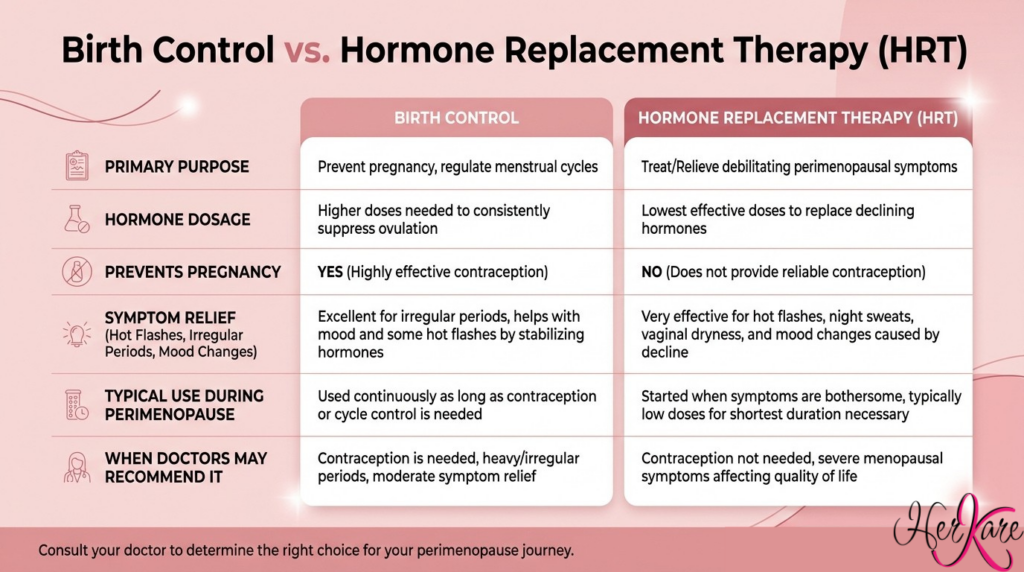
- Birth control is designed to prevent pregnancy and typically contain higher amounts of hormone levels to suppress ovulation. Menopause hormone therapy is intended to relieve symptoms such as hot flashes and unrestful sleep. Hormone replacement therapy usually contains lower hormone doses than birth control. At HerKare, a provider can help you determine which option is best for you during perimenopause.

You may still need birth control during perimenopause to prevent pregnancy.
What is Perimenopause?
First, let’s clarify what we mean by “perimenopause.” The terms perimenopause and menopause are often used synonymously, but they are actually different stages of your life. Perimenopause is the time leading up to menopause. Menopause is when you have gone 12 consecutive months without a period.
During perimenopause, your hormones may start to fluctuate more, but you’re still producing a fair amount of both estrogen and progesterone. When you reach menopause and postmenopause, your ovaries produce very little of these hormones and stop releasing eggs. Perimenopause typically begins in your 40s. It usually lasts around four years before you reach menopause. However, this can be longer or shorter for different women, even up to 10 years or more. The average age for menopause is 51 years old, though it can come earlier or later.
Symptoms of Perimenopause
There are many symptoms that can point to perimenopause. While there is no one test or sign that you’ve started perimenopause, some symptoms can signal that you may be in perimenopause.
Some symptoms of perimenopause include:
- Irregular periods
- Fatigue
- Spotting or breakthrough bleeding
- Breast tenderness
- Headaches
- Low libido
- Difficulty concentrating (“brain fog”)
- Hot flashes
- Night sweats
- Vaginal dryness
- Mood changes
If you’re dealing with these symptoms, then it may mean that you’re starting the transition to menopause. You can talk to one of our treatment providers about your symptoms to determine whether you might be in perimenopause and how we may be able to help reduce or relieve your symptoms.
Can You Still Get Pregnant During Perimenopause?
Now, it’s a common misconception that you can’t get pregnant during perimenopause. This is incorrect. You can absolutely still get pregnant during perimenopause. Your body typically still ovulates during perimenopause. While periods might be irregular or different during perimenopause, pregnancy is still a risk with unprotected sex. Therefore, many women still need contraception in the years leading up to menopause if they don’t wish to become pregnant. The risk of becoming pregnant generally doesn’t go away until after you’ve reached menopause, one year after your last period. Hormonal birth control is one of the most common forms of contraception, so many women continue to take these medications up until they reach menopause.
Birth Control May Mask Symptoms of Perimenopause
It’s important to note that hormonal birth control, like the pill, can actually mask symptoms of perimenopause and menopause. Hormonal birth control uses synthetic versions of female hormones estrogen and progesterone, which control menstruation, pregnancy, and more. Hormonal birth control can help regulate hormone levels to control periods and reduce the risk of pregnancy.
Symptoms of perimenopause and menopause are typically caused by fluctuating and declining levels of estrogen and progesterone in your body. Therefore, if you’re taking hormonal birth control, it may mask some of the symptoms of perimenopause by replacing your natural hormones with synthetic versions. Your symptoms may not be as noticeable if you’re still on hormonal birth control when you start perimenopause.
Also, many women who do experience symptoms may not associate them with perimenopause, as birth control side effects can be very similar to perimenopause. For instance, changes in mood and sex drive can be side effects of birth control and symptoms of perimenopause.
Even after menopause where your ovaries stop producing estrogen and progesterone, birth control can make it appear that you are getting regular periods. When taking combination birth control with both estrogen and progesterone, you may experience withdrawal bleeding that mimics your period, even though you’ve reached menopause.
Hormonal Birth Control May Help Reduce Symptoms during Perimenopause
In a similar vein, some women notice that their perimenopause symptoms get better after beginning hormonal birth control. Some doctors may even prescribe birth control during perimenopause to help with symptoms even if you’re not looking for a contraceptive. Of course, this depends on your individual circumstances. Some women may not benefit from birth control during menopause, and for some the risks outweigh the benefits. However, the hormones in birth control may help some women feel better during perimenopause.
As you transition into menopause, your hormone levels may fluctuate quite a bit. This can cause many symptoms that affect your quality of life, such as hot flashes and mood changes. Birth control can help regulate your hormones to reduce these fluctuations. This may, in turn, help alleviate some of your perimenopause symptoms.
How to Know if You’ve Transitioned to Menopause while On Birth Control?
So, if you take birth control during perimenopause and it can mask symptoms and even cause bleeding that mimics a normal menstrual period, how do you know if you’ve reached menopause? In most cases, stopping birth control can help you determine if you have reached menopause. Just keep in mind that until you are sure you have gone for one year without a period, you may need other forms of contraception, such as condoms, to help prevent pregnancy. Even if you have gone several months without a period, you may still be perimenopausal and still able to get pregnant. Talk to one of our treatment providers about your specific circumstances.
When Should Perimenopausal Women Stop Taking Birth Control?
You might be wondering if there is a certain time you should stop taking birth control after you enter perimenopause. Once again, this is personal, so it’s important to discuss the specifics with one of our treatment providers.
However, many doctors do recommend some women stop birth control at the average age of menopause (51 years old) to determine if they’ve reached menopause yet. Also, it’s important to understand that with age, the risks of birth control can get higher. For instance, some hormonal birth controls can increase your risk for blood clots, stroke, breast cancer, heart attacks, and other health conditions. Therefore, our treatment providers may recommend stopping or switching hormonal birth controls based on your risks, even if you’re not in perimenopause.
What’s the Difference Between Hormone Therapy and Birth Control?
You may have heard of women taking hormone therapy during and after perimenopause. If birth control typically contains hormones, what is the difference between birth control and hormone therapy for menopause?
Hormone therapy and birth control have different purposes and do different things in your body. Therefore, one might be better than the other for your circumstances.
Generally speaking, birth control is primarily to prevent pregnancy (though you might also use it for other things like regulating your cycle, reducing PMS symptoms, or even to help with hormonal acne). Hormonal birth control typically contains synthetic forms of estrogen and progesterone that are much stronger than you would find in the average hormone therapy medication. Also, most forms of hormonal birth control override ovarian function, meaning they tell your ovaries to take a break while they provide the hormones instead.
By contrast, hormone therapy is primarily used to help reduce symptoms of menopause. These medications help supplement what your ovaries naturally produce. HRT also typically provides much less estrogen and/or progesterone than birth control medications, providing the minimum amount needed to help with your symptoms. Hormone therapy also isn’t an effective form of contraception.
Does Birth Control Delay Menopause?
Another question you have is whether taking hormonal birth control delays menopause. After all, if you might have fewer symptoms and might continue bleeding each month while taking the pill, that certainly sounds like you’re not in menopause. However, this is another common misconception.
Birth control doesn’t stop, delay, or turn back the clock on menopause. Menopause is the end of your reproductive years, meaning your ovaries stop releasing eggs and producing as much estrogen and progesterone. As far as we know, there is nothing we can do or take to prevent menopause from happening. So, while birth control might mask the signs and symptoms, it won’t make your ovaries continue to function as they did in premenopausal years.
Comprehensive Women’s Health Care from Our Providers at HerKare
Our treatment providers at HerKare are here to help you address your health and feel your best. We can help you make important decisions around birth control, health risks, and symptom relief during and after menopause. Our team is dedicated to providing high quality women’s health care at every stage of life. Make an appointment today to learn more and discuss your health with one of our medical providers.

by SXHH Marketing | Aug 5, 2021 | Hormone Replacement Therapy, Menopause
Estrogen replacement therapy is a medication commonly prescribed during menopause. For many women, the benefits of hormone replacement outweigh the risks, which is why our providers may prescribe estrogen for your symptoms. As with any medication, it’s important to understand the potential risks, side effects, and the benefits. This can help you and the doctor make an informed decision about your treatment plan. Talk to one of our treatment providers about the pros and cons of estrogen injections for you specifically. In this article, we’ll talk about some risks and benefits in a more general sense.
Estrogen Replacement Therapy for Menopause Symptoms

Estrogen replacement therapy can help relieve menopause symptoms.
Hormone replacement treatment is typically prescribed to women who are experiencing symptoms of menopause. As we enter perimenopause, our bodies produce less and less of the hormones estrogen and progesterone. Hormones can also start to fluctuate more during this time. Eventually, our ovaries begin to produce only low levels of estrogen and progesterone, which causes the menstrual cycle to stop, also known as menopause.
Unfortunately, many women experience serious symptoms during perimenopause (before the end of menstruation), menopause (12 months after your last period), and post-menopause (the period after menstruation stops). Some of these symptoms include:
- Hot flashes
- Night sweats
- Mood changes
- Vaginal dryness
These symptoms can occur because of fluctuating and declining hormone levels that come with menopause. Most believe low estrogen levels are mainly to blame for these often uncomfortable symptoms.
For some women, these symptoms can be so severe that they interfere with normal life. Symptoms typically begin around perimenopause and can last well into post-menopause. However, estrogen replacement therapy may help relieve menopause symptoms.
Types of Menopausal HRT
The goal of menopausal hormone therapy is to help balance out hormones to help reduce symptoms. Most health experts recommend using the lowest dose of hormone imbalance treatment for the least amount of time.
Generally, there are two basic options for menopausal HRT: estrogen-only and combination (estrogen and progesterone) therapy. Estrogen-only medications are used for women who have had a hysterectomy and therefore don’t have a uterus. If you still have a uterus, the doctor may recommend combination hormone therapy. This is because progesterone can help balance out the estrogen to help reduce the risk of thickening of the uterine walls and the potential risk of uterine cancer.
There are also several different options for the type of medication you use, such as pills, lotions, patches, and injections. Estrogen injections can help with dosage control and provide hormones to your whole body. These are injected into the muscle by one of our treatment providers, and the medication then enters your bloodstream. This may help reduce or alleviate bothersome symptoms of menopause. For most menopause treatment plans, you will need regular injections to help with your symptoms.
Estrogen Replacement Therapy Offers Many Benefits
As you may have guessed, estrogen replacement therapy can offer many benefits for a lot of women. In many cases, the benefits outweigh the risks of taking estrogen replacement treatment. Several studies have found that this is the case for most healthy women who start estrogen at age 59 or younger or who are within 10 years of menopause.
Estrogen during menopause can help with some common symptoms like hot flashes that can be frustrating, uncomfortable, and even interfere with day-to-day life. Hormone replacement treatment can help improve quality of life for many women during menopause. This is one of the main benefits of starting an HRT regimen. If you are experiencing menopause symptoms, talk to one of our treatment providers to see if estrogen injections may be a treatment option for you.
Potential Side Effects of Hormone Replacement Treatment
Just like any other medication, hormones for menopause can also cause side effects for some women. Fortunately, for most women that experience side effects, they notice they go away after a short period of time once they “get used to” the medicine. However, if you notice side effects that are severe or don’t go away, then it’s usually a good idea to check in with the doctor to see if you’re still a good candidate for HRT.
Here are some of the potential side effects of estrogen injections for menopause:
- Headaches
- Breast tenderness
- Nausea
- Nervousness
- Acne
- Bloating
- Dizziness
- Swelling in the hands, feet, or ankles
- Changes in menstrual cycle
- Spotting
- Vaginal itching or discharge
- Changes in sex drive
- Difficulty wearing contact lenses
Potential Risks of Estrogen Replacement Therapy
In addition to potential side effects that may go away with time, estrogen replacement therapy can also increase your risk for some health conditions. Your risks are based on many different factors, like your medical history, genetics, and other factors. However, there are a few things to be aware of.
Some risks of taking estrogen or estrogen and progesterone therapy include:
- Estrogen-only therapy for women who still have their uterus can increase the risk for endometrial cancer.
- Hormone imbalance treatment during menopause may increase the risk for stroke, though some studies suggest the risk is lower if you begin HRT within 5 years of menopause.
- Hormone therapy also increases the risk for breast cancer. For women taking estrogen-only therapy, the risk increases after 7 years. Those on combination therapy have an increased risk after 3 to 5 years.
Therefore, it’s important to talk to the doctor about your individual risk factors to help you decide if estrogen is right for you.
Potential Estrogen Injection Interactions
Also, just like other medicines, estrogen injections can interact with other things, such as medicines, herbs, and even foods you eat. That’s why it’s important to talk to our provider about everything you take, including non-prescription herbs and supplements.
A few examples of estrogen interactions include:
Therefore, keep in mind that estrogen replacement therapy may interact with foods, drugs, and other substances which can cause health issues, increased risks, or side effects.
Get High Quality Care from HerKare Women’s Clinics
Our team at HerKare believes women should be empowered to take care of their health. We are a women’s health clinic by women for women to help you feel your best. We listen and understand to help create personalized treatment plans for your symptoms. Our treatment providers can discuss different treatment options and provide support to help you make informed decisions about your wellness. Whether you’re dealing with uncomfortable menopause symptoms or need to talk about other health concerns, we are here for you. Make an appointment today!

by SXHH Marketing | Jul 6, 2021 | Hormone Replacement Therapy, Menopause
Where did I leave my keys? What’s their name again? I know I walked in here for a reason… Brain fog is a common menopause symptom that can be frustrating for many women. It can cause issues remembering things, difficulty concentrating, and confusion. An estimated 60% of women experience brain fog during menopause. However, HRT may be able to help reduce brain fog and help you feel more like yourself. Let’s talk about why hormones might affect your brain.
Can HRT Help with Brain Fog?

Brain fog can be difficult to deal with for some women, which is why doctors may recommend HRT to help with your symptoms.
Brain fog is a serious issue for many women. Some women experience mild symptoms and some won’t experience it at all. However, others may start to notice it interferes with their lives. Brain fog can be frustrating and isolating for many women during menopause. Some may even be alarmed and wonder if they’re showing early signs of dementia when brain fog is particularly bad. Brain fog has been associated with the menopause transition, which has led many researchers to consider whether hormones play a part in brain fog. Some studies are also looking at whether hormone therapy can help improve brain fog symptoms.
What is Brain Fog?
Brain fog is different from memory changes that come with normal aging. Most people will experience forgetfulness and other cognitive changes as our bodies and brains change with age. These changes, much like normal aging, can come on gradually.
Brain fog, on the other hand, often happens suddenly with the beginning of perimenopause. Most women describe it as an increase in forgetfulness, whether forgetting someone’s name, why you walked into a room, or the password to your phone. Several studies have found that women during menopause score lower on tests for:
- Verbal learning
- Memory
- Motor function
- Attention
- Working memory
Brain fog may be to blame for these lower cognitive scores. With brain fog, you might notice it begins around the time of perimenopause and symptoms can continue into early menopause. The good news is that brain fog typically isn’t permanent and most women notice the symptoms fade away after some time. However, they may still deal with frustrating symptoms for several years, much like other menopause symptoms such as hot flashes. Depending on your symptoms and overall health, our providers may recommend HRT to help with perimenopause and menopause.
Why Does Brain Fog Happen During Menopause?
So, what does menopause have to do with brain fog? It turns out, quite a lot.
First of all, menopause can cause a whole host of symptoms, some of which can affect our brains. For example, night sweats can hinder normal sleep. Lack of sleep can make it feel like you’re walking through a fog and can affect your cognition. Mood changes, depression, and anxiety can all also affect your memory and attention.
However, researchers have found that there may be more at play than sleep and mood disturbances when it comes to menopausal brain fog. During menopause, our hormones start to fluctuate and decline, leading up to our very last period. Estrogen is one of the main hormones involved in this process. Some researchers believe decreasing estrogen levels may have an impact on memory and learning, which might explain why many women experience brain fog during menopause.
Estrogen May Help with Memory, Learning, and Cognition for Menopause Treatment
Most of us associate estrogen with things like periods, puberty, and pregnancy. However, this important female hormone may also help our brains. Some researchers believe that estrogen can also help with memory and cognition. For instance, researchers have noticed that female mice notice major declines in memory when they lose estrogen. However, when that estrogen is replaced, mice in studies often improve. Therefore, there may be a link between estrogen and memory. This may also mean that HRT may help fight brain fog during menopause.
One potential explanation of why estrogen may affect memory is that it might affect the hippocampus. Estrogen may influence many functions of the hippocampus, the part of the brain associated with memory formation and learning.
Estrogen’s Effects on the Hippocampus
We have known for a while that estrogen is neuroprotective. In other words, it helps protect nerve endings. Therefore, estrogen may help protect the hippocampus from damage. In turn, this might help protect against brain fog and cognitive decline.
Also, there may be several other ways estrogen can affect the hippocampus. Researchers are still studying the effects of estrogen on the brain and hippocampus. However, what they have found is that estrogen may help increase the number of spines in the brain. Spines branch off of nerve cells in the brain and are essentially how brain cells communicate with each other. So, estrogen may help improve communication between brain cells in the hippocampus, which may also assist with memory.
HRT Can Help Replace Estrogen Lost During Menopause
Estrogen replacement is often used as a form of menopause treatment. The idea is to help replace the estrogen that’s lost during menopause. This can help relieve some of the unpleasant and frustrating symptoms of menopause.
Some researchers theorize that if estrogen affects the hippocampus and other parts of the brain, then HRT may also help with brain fog. This may be due to estrogen reaching the receptors in the brain. Also, if brain fog is due to things like fatigue or mood changes, then estrogen may help reduce these symptoms which, in turn, helps reduce brain fog. For example, hormone therapy can help relieve night sweats that keep many women up at night and can cause foggy, tired thinking.
So, if you’re dealing with brain fog and other menopause symptoms, talk to one of our providers. You’re not alone, and there are many treatments available that may help you feel better. In addition to menopausal hormone replacement therapy, we can also help you design a treatment plan that includes lifestyle changes like diet and exercise to help you address and relieve your symptoms.
Quality Care for Women at Every Stage of Life
Looking for quality health care from a caring team of doctors and health professionals? Our team at HerKare is here for you. We offer quality women’s health care at every stage of life. Whether you’re dealing with brain fog from menopause or need well woman care, we are here for you. We believe in empowering women to address their health by listening to your concerns and providing quality care to help. Book an appointment at one of our convenient locations today and let’s talk about your wellbeing.

by SXHH Marketing | Jun 4, 2021 | Hormone Replacement Therapy, Menopause, Wellness
Does menopause have you feeling hungry all the time? Hormone imbalance treatment may help curb your appetite! Many women gain weight during menopause, particularly around their midsection. Unfortunately, this weight gain may lead to being overweight or obese, which can cause some serious health consequences. However, our health providers can help you design a personalized strategy to help you maintain a healthy lifestyle and weight.
Summary
- Hormonal changes during menopause can increase appetite and cravings. Whilst estrogen itself does not make you hungry, as estrogen levels decline, women may notice feeling hungrier and may experience changes in metabolism. Lower levels of estrogen can slow calorie burning and increase hunger signals, which may contribute to weight gain during perimenopause and menopause.
- Estrogen plays an important role in regulating appetite and metabolism. Research suggests estrogen interacts with areas of the brain that control hunger and may work with similarly to another hormone that signals fullness.
- Hormone replacement therapy may help reduce appetite during menopause. Hormone replacement therapy, specifically estrogen replacement therapy, can help restore hormonal balance and improve symptoms like hot flashes, brain fog, and increased appetite. With consistent treatment, HRT may also support metabolism and help regulate hunger signals in the body.
- Lifestyle habits can also support appetite control during menopause. Eating slowly. choosing nutrient-dense foods and adding physical activity to your daily routine can help manage hunger and support healthy weight management. Talk to your provider to learn more about hormone replacement therapy and whether it is right for you.

Hormone imbalance treatment may help regulate your appetite after menopause by increasing estrogen levels in your body.
Appetite Out of Control? Hormone Imbalance Treatment May Help
A lot of changes happen during menopause, including appetite changes for some women. Many notice that they feel hungrier or even experience more cravings as they transition into menopause. This could be due to many different things, such as increased stress levels or emotional changes. What many people don’t realize is that hormone changes can also contribute to appetite changes during menopause.
Fortunately, if hormone imbalances are to blame, hormone imbalance treatment may be able to help regulate your appetite. For instance, low estrogen is a common issue for women during perimenopause that can cause a whole host of symptoms, from sleep issues, mood changes, and hot flashes. Estrogen also plays an important role in appetite and metabolism. So, low estrogen may increase your appetite and slow down your metabolism.
How Estrogen Affects Appetite
Declining estrogen levels are often to blame for many of the changes we experience during menopause. Therefore, many women choose to start an estrogen replacement therapy regimen during menopause.
You’ve probably heard of some common symptoms low estrogen levels during menopause can cause, like hot flashes and mood changes. Evidence now suggests that estrogen can play a role in increased appetite during menopause.
While many women have said for years that they felt hungrier after menopause, researchers weren’t sure why. Now there have been several studies about how estrogen helps regulate appetite, both during the menstrual cycle in premenopausal women as well as during and after menopause. It’s important to understand how estrogen affects appetite to understand why you might feel hungrier and how you might be able to help control your appetite and cravings.
Estrogen Curbs Appetite in the Brain
Scientists are still researching how estrogen affects appetite. However, some studies, including one from the Yale School of Medicine, have found that estrogen may act similarly to the hunger suppressing hormone leptin.
Researchers in the Yale study found that estrogen regulates your metabolism, likely through the estrogen receptors in the brain. Estrogen may even use the same pathways in the brain as the hormone leptin to help reduce appetite. The study’s author theorized that low estrogen might be responsible for changes in metabolism during menopause, such as burning fewer calories and increased appetite. They also mentioned that estradiol may play a key role in helping reduce the risk of weight gain by helping regulate the appetite, especially for those who are leptin resistant.
Estrogen can mimic a lot of the same effects of leptin, but what does that mean? First, let’s go over what leptin actually is. Leptin is a hormone made of fat cells. The more fat you have in your body, the more leptin you should have. Since fat is your body’s version of energy stores, the leptin hormone helps signal that you don’t need to continue storing as much fat. Basically, it tells your brain to cool it on appetite and ramp up your metabolism to help burn some of those energy stores. Estrogen can also help reduce appetite and increase metabolism similar to how leptin does.
Essentially, for most women when estrogen is higher, they feel full and satisfied sooner and many have fewer cravings because of the amount of estrogen reaching the receptors in the brain. However, during menopause, your body produces less estrogen, which can make your appetite higher and your metabolism slower, as well as causing other menopause symptoms. Therefore, hormone imbalance treatment to help keep estrogen balanced may help reduce these symptoms.
Estrogen May Affect Hunger Hormones
Estrogen levels can also affect your hunger hormones. For instance, chronic low estrogen levels, such as after menopause, can cause leptin resistance. Estrogen may also affect other hunger hormones like ghrelin and cholecystokinin (CCK). Ghrelin is a hormone that helps tell you when you’re hungry and need to eat. Estrogen may help suppress ghrelin, which can help reduce how hungry you feel. CCK is a hormone that helps tell you when you’re full. Estrogen can also increase the potency of CCK in your body to help you feel full and satisfied longer. Low estrogen levels can throw these hormones off as well, which can also increase your appetite during menopause.
Other Ways Menopause May Affect Hunger and Appetite
Of course, there may be other reasons why many women have increased appetite during menopause. For instance, sleep deprivation can not only make you feel hungrier, but also have you reaching for fast energy, but low nutrient foods like sodas and sweets. Sleep issues are also common during menopause, especially for women who suffer from night sweats, or hot flashes at night.
In addition, other menopause symptoms can also cause lifestyle changes that might increase your appetite. Things like reaching for comfort foods due to mood changes or feeling like you don’t have much energy can hold you back from getting exercise can also make it difficult to maintain a healthy weight and control your appetite and cravings.
Hormone Imbalance Treatment Can Help Reduce Appetite During Menopause
If you’re struggling with symptoms of menopause, our medical team may recommend hormone replacement treatment to help. Taking estrogen may help bring your hormones back into balance to help alleviate symptoms like hot flashes and sleep disturbances that interfere with your life and overall, well-being. Since estrogen may play such an important role in appetite, estrogen replacement therapy may also help your body regulate appetite and boost metabolism as well.
Other Lifestyle Changes to Consider
In addition to hormone therapy, our providers may also recommend healthy lifestyle changes to help you improve wellness during menopause. If you’re dealing with increased appetite during menopause, there are some things you can do to help reduce the risk of overeating.
For instance, eating more slowly can help you better pick up on signals that your body is full. Also, eating a healthy diet with plenty of low calorie and high fiber foods may also help you control how many calories you’re taking in. Starting an exercise program can also help you burn more calories to help you manage your weight during menopause.
Our team takes a holistic approach to healthcare, which means we help design treatment and wellness plans that suit your lifestyle and take underlying causes of your symptoms into account. We may recommend multifaceted approaches as part of your treatment plan to help you tackle your unwanted symptoms head-on.
Hormone Replacement Treatment at HerKare
When you need quality women’s health care, choose our team at HerKare. We specialize in providing treatment solutions to women at every stage of life, including during menopause. We also offer bioidentical hormone therapy to help keep your hormones in balance before, during, and after menopause. Make an appointment today and let’s talk about how you’re feeling and what we can do to help.