
by SXHH Marketing | Aug 7, 2026 | Weight Loss, Wellness
For many people, shopping for clothes is a meaningful part of expression. Finding the right pieces bring a sense of confidence and excitement about the way you show up in the world.
GLP-1 medications are becoming more common with about 11% of people in the United States report using or having tried a GLP-1 medication. That number is continuing to rise as many women are noticing changes that go beyond the scale, including shopping. As their bodies change, some women are refreshing their wardrobes and finding new confidence in their everyday choices.
But your wardrobe isn’t the only thing that’s changing.
GLP-1s can influence many areas of daily life, from the way you think about food to how you build healthier habits. But before we explore these changes, let’s start with the basics.
Summary
GLP-1s work by mimicking a natural hormone in the body to help regulate appetite, digestion, and blood sugar. They can help come people feel fuller longer and reduce constant thoughts about food, often called “food noise.”
Beyond weight management, GLP-1s can support brain health, metabolic health, and healthier routines. Research shows how GLP-1s can lower the risk of dementia and cardiovascular events.
GLP-1 medications are often surrounded by misconceptions. Common myths about GLP-1s being “cheating,” causing “Ozempic face,” or only being for people with diabetes are creating confusion about GLP-1s in healthcare.
GLP-1 therapy is not a one-size-fits-all approach. A HerKare provider can help determine whether GLP1s may fit into your personalized plan.
What are GLP-1s and how do they work?
GLP-1 stands for glucagon-like peptide-1, a hormone naturally produced in the body. GLP-1 medications work by mimicking this natural hormone, helping:
- Slow digestion
- Support feelings of fullness
- Regulate appetite signals
- Support healthy blood sugar levels
By helping regulate appetite signals, GLP-1 medications make it easier for some people to focus on mindful eating and healthier habits by reducing “food noise” or constant thoughts surrounding food.
GLP-1s can support the body in other ways, too.
GLP-1 benefits beyond weight loss
GLP-1s pathways can influence functions beyond appetite regulation, including:
GLP-1 receptors support brain health by lowering inflammation in the brain, improving blood flow, and protecting your neurons from damage. Clinical trials have also shown that GLP-1s may even lower the risk of developing dementia.
- Supporting metabolic health
Because GLP-1s mimic a natural hormone, it’s able to slow down digestion so you feel full longer, lower the amount of sugar your liver releases, and tell your brain when you’ve had enough.
GLP-1s also offer cardiovascular support by lowering your blood pressure, reducing the likelihood of developing heart-related problems.
- Helping build healthier habits
When your appetite feels more manageable, some find it easier to create routines around balanced nutrition, physical activity, and self-care. With fewer distractions from constant cravings, healthy choices may begin to feel more sustainable.
Small habits, like going for a walk and staying hydrated, can become easier to maintain over time. While no one’s journey is the same, these lifestyle changes can play an important role in supporting your long-term and short-term wellbeing.

5 common misconceptions about GLP-1s
With more people talking about GLP-1 medications than ever before, it’s easy to come across misinformation online. While some claims are based on facts, others can create concern, so let’s clear up a few of the biggest misconceptions when it comes to GLP-1s.
1. Taking GLP-1s is “cheating”.
There is no “right” or “wrong” way to seek support for your health. GLP-1 medications are a tool that can help some people reach their health goals, just like other medical treatments supports different needs. Choosing a treatment option that works for your body is a personal decision.
2. Once you stop, you will gain it all back.
There is a common misconception that stopping a GLP-1 medication automatically means regaining all lost weight, but it’s more complex than that.
Weight management depends on several factors, including lifestyle habits, metabolism, and whether you continue working with a healthcare provider after treatment.
3. GLP-1s will make you look bad.
You may have heard of the term “Ozempic face”. It’s mostly used online to describe the changes in appearance after weight loss.
When someone loses a significant amount of weight, changes in facial volume can occur because fat loss happens throughout the body, including the face. However, these changes are not unique to GLP-1 medications. Changes in facial volume can happen with any significant weight loss.
4. GLP-1s are only for people with diabetes.
While, yes, GLP-1 medications were first developed to help manage type 2 diabetes, their benefits extend beyond blood sugar regulation. Certain GLP-1 medications have also been approved for weight management for those without diabetes.
A HerKare provider can help determine whether GLP-1 therapy is right for you.
5. The side effects are unbearable.
Like any medication, GLP-1s can come with side effects. Some people may experience symptoms such as:
- Nausea
- Constipation
- Diarrhea
- Changes in appetite
These changes are common, especially when first starting treatment.
However, side effects are not the same for everyone, and many people find they become more manageable over time. Starting with the right dosage, following provider guidance, and maintaining healthy habits can support a more comfortable experience.
Finding the right approach for you at HerKare
Your health goals are personal, and the care you receive should be too.
At HerKare, GLP-1 medications including Semaglutide and Tirzepatide may be an option to consider as a part of your weight loss journey.
Ready to explore whether GLP-1 support is right for you?
Schedule an appointment today.
People Also Ask
Are GLP-1 medications safe?
GLP-1 medications have been studied and are considered safe for many when prescribed and monitored by a healthcare provider.
Are all GLP-1 medications the same?
No. While all GLP-1s work by mimicking the body’s natural GLP-1 hormone, they are not all the same.
Different medications may vary in their active ingredients, dosing schedules, and potential side effects. A healthcare provider can help determine which option is right for you.
Can GLP-1 medications be used with hormone replacement therapy (HRT)?
Yes. GLP-1 medications and hormone replacement therapy (HRT) can be used together as part of your personalized plan.
Can GLP-1s help with menopause weight changes?
Yes. GLP1s can help manage and reduce menopausal weight changes. Studies have shown that women in menopause can lose body weight and belly fat on GLP-1s.
Sources:
How does Ozempic work? Understanding GLP-1s for diabetes, weight loss, and beyond – Harvard Health
In U.S., GLP-1 Usage Reaches New High
https://jamanetwork.com/journals/jama/article-abstract/2833663
Semaglutide and Cardiovascular Outcomes in Obesity without Diabetes | New England Journal of Medicine
The expanding benefits of GLP-1 medicines – PMC
Women in Menopause Benefit From GLP-1 Weight-Loss Medications as Much as Younger Women | Research | Advances in Endocrinology, and Women’s Health | NewYork-Presbyterian

by SXHH Marketing | Jun 12, 2026 | Uncategorized
For over 12 years, women have trusted HerKare to help guide them through some of life’s biggest hormonal changes, from perimenopause to menopause to low energy, weight changes, mood shifts, and more.
Now, that care is evolving under one unified name: SynergenX.
Over the next year, HerKare clinics along with Low T Centers across the country will slowly transition to the SynergenX brand. While the name and look may change, our commitment to women’s wellness remains the same.
This transition reflects the continued growth of a company focused on helping you feel healthier, more confident, and like yourself again through personalized, medically guided care.
Since 2016, SynergenX has worked to create a more supportive and individualized approach when it comes to wellness. For many women, hormonal changes during perimenopause and menopause can affect nearly every part of daily life. And at SynergenX, care is made to address the full picture, not just a single symptom.
In addition to hormone therapy, SynergenX continues to expand services for women through medically guided weight management, wellness therapies, and ongoing support designed to help you feel your best at every stage of life.
Over the years, hundreds of thousands of women have trusted HerKare with their care. Many women find themselves at HerKare feeling exhausted and disconnected from the version of themselves they once knew. And these women leave feeling more balanced, energized, and confident in their health journey. For CEO Wayne Wilson, these experiences continue to drive the company’s mission forward:
“Helping patients feel like themselves again is one of the most meaningful things we can do in healthcare. This transition reflects who we are today and where we are going in the future. The SynergenX brand represents our commitment to personalized care, innovation, and helping patients become the healthiest, strongest versions of themselves.”
This transition to the SynergenX brand will happen slowly across clinic signage, websites, communications, and digital platforms over the coming year. If you are a patient, you can continue to expect the same providers, the same care teams, and the same compassionate approach to wellness throughout the process.
While the HerKare name is changing, our mission remains the same: Helping women feel balanced, supported, confident, and empowered in their health.

by Kalea Gates | Jun 11, 2026 | Weight Loss, Wellness
If you’ve been researching medical weight loss, chances are you’ve come across GLP-1s like Tirzepatide. And with the market expected to reach over $150 billion, it is no wonder that GLP-1’s are the most talked-about medications available today. But recently, there has been a new name garnering attention in the weight loss space: Retatrutide.
While Retatrutide is still being studied and not-yet FDA approved, clinical trials have sparked interest, with some health experts calling it a potential next-generation weight loss treatment.
Considering the many options on the market today, how does this new contender, Retatrutide, compare to a popular option like Tirzepatide?
Summary
GLP-1 medications are reshaping medical weight loss, with Tirzepatide leading the current market while Retatrutide emerges as a promising new contender. Tirzepatide has gained widespread attention due to its strong clinical results, at the same time, interests have been growing around next-generation therapies like Retatrutide. The weight loss medication market continues to expand rapidly as research evolves.
Retatrutide is still in clinical trials, but it is designed to go a step further by targeting three hormonal pathways. Early clinical trial data suggests it could deliver even greater weight loss potential than current treatments on the market. However, it is not yet FDA-approved or available by prescription.
The key difference between Tirzepatide and Retatrutide is the number of metabolic pathways they activate. Tirzepatide is an established, FDA-approved treatment with real-world outcomes, while Retatrutide remains investigational. Retatrutide’s added glucagon may offer enhanced metabolic effects, but those benefits are still being studied. Both represent different stages of advancement in the same evolving treatment landscape.
The future of weight loss therapy is shifting toward more personalized and metabolically targeted care. While newer treatments like Retatrutide are generating excitement, established options like Tirzepatide remains the current standard. At HerKare, treatment plans are tailored to individual goals and health history. Speak to a provider today to find the most effective weight loss plan.
What is Tirzepatide?
Not only is Tirzepatide a popular GLP-1, it is number one in its industry with brand names like Mounjaro and Zepbound. Originally developed to help manage type 2 diabetes, Tirzepatide quickly gained popularity for its effective weight loss results.
What sets Tirzepatide apart from other GLP-1s is that it mimics two natural hormones found in your gut: GIP and GLP-1. By targeting both GIP and GLP-1 hormones, Tirzepatide is able to suppress your appetite, stabilize blood sugar, and reduce “food noise” helping to cut food cravings. But beyond weight reduction, Tirzepatide has also shown to improve metabolic health by increasing insulin sensitivity.
Through Tirzepatide’s unique dual-action system, it has become the leading option for weight loss medications, setting the standard and paving the way for newer treatments like Retatrutide.
What is Retatrutide?
Retatrutide is a weight-loss medication that is currently still in development and not yet FDA-approved. While being in Phase 3 of clinical trials, Retatrutide is being looked at as the next step beyond treatments like Tirzepatide.
What makes Retatrutide different is that instead of mimicking two hormones, it mimics three: GIP, GLP-1, and Glucagon. These three hormones work together to support significant weight loss and blood-sugar management compared to Tirzepatide.
From what we know from clinical trials, Retatrutide may potentially boost energy while also accelerating calorie burning through the glucagon receptor which has never been seen before in a weight loss treatment.
While Tirzepatide is currently setting the bar when it comes to weight loss, Retatrutide is testing how high it can go.
Retatrutide vs. Tirzepatide
When comparing Retatrutide and Tirzepatide, the biggest difference between the two comes down to how many pathways each medication targets.
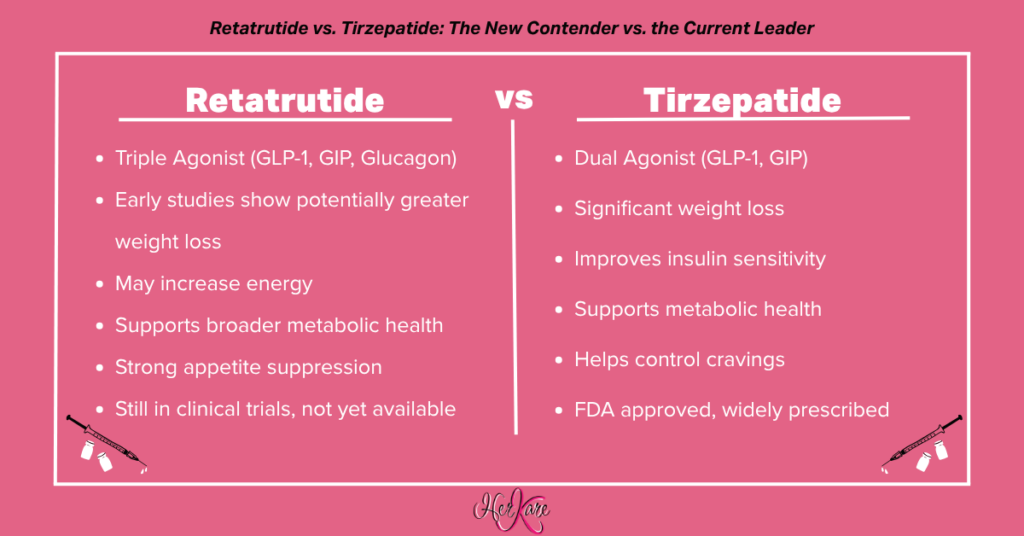
Tirzepatide, FDA-approved, targets GLP-1 and GIP receptors. This helps regulate appetite, improves blood sugar control, and supports steady weight loss. Because of
its real-world use and results, it has quickly become the all-star in medical weight loss treatments.
Retatrutide, on the other hand, is still in development. In addition to GLP-1 and GIP receptors, it also targets the glucagon receptor. With this added pathway, researchers believe that Retatrutide may increase energy and metabolism in ways that current treatments don’t.
It is important to note that Retatrutide is not FDA-approved and not available for prescription use, but it is currently being watched as the next step in how we approach weight loss and metabolic health.
The Future of Weight Loss Therapy
The future of medical weight loss is evolving so quickly. Not long ago, treatments used to focus on just appetite suppression. Today, medications like Tirzepatide are not only suppressing appetite but supporting metabolic health as well. And now, new and upcoming therapies like Retatrutide are pushing these advancements even further.
But newer doesn’t always mean better for everyone. The most effective weight loss plans are one that is tailored to your unique goals and hormonal needs.
At HerKare, we are committed to staying informed on the evolving treatment options when it comes to women’s health. We are excited about the future of Retatrutide and look forward to making these new treatments available to our patients.
In the meantime, we offer personalized weight loss programs to help you reach your goals with confidence.
Want to explore your options? Book an appointment today to discover personalized weight loss plans.
Book An Appointment
People Also Ask
Is Tirzepatide still a good option for weight loss?
Yes. Tirzepatide is still one of the most effective medications for weight loss.
Can women experiencing perimenopause or menopause take Tirzepatide?
Yes! Because perimenopause and menopause cause hormonal changes like weight gain and metabolic changes, Tirzepatide may be a helpful option.
When will Retatrutide become available?
An exact timeline is unknown. Retatrutide must complete clinical trials and receive FDA approval before it can become widely available.
How do I know which weight loss treatment is right for me?
The best weight loss treatment depends on several factors including health history, goals, and lifestyle. A HerKare provider can help determine whether options like Tirzepatide may be right for you.
Comparative Efficacy of Tirzepatide vs. Semaglutide in Reducing Body Weight in Humans: A Systematic Review and Meta-Analysis of Clinical Trials and Real-World Data – PMC
Triple–Hormone-Receptor Agonist Retatrutide for Obesity — A Phase 2 Trial | New England Journal of Medicine
FDA’s Concerns with Unapproved GLP-1 Drugs Used for Weight Loss | FDA
A Study of Retatrutide (LY3437943) in Participants Without Type 2 Diabetes Who Have Obesity or Overweight (TRIUMPH-9)
Retatrutide – PMC
Retatrutide—A Game Changer in Obesity Pharmacotherapy – PMC
Tirzepatide (subcutaneous route) – Side effects & dosage – Mayo Clinic
GLP-1 Receptor Agonist Market Size | Industry Report, 2033

by SXHH Marketing | Jan 25, 2019 | Wellness
A lot of first time moms think that pregnancy weight will just fall off quickly after delivering their babies. We’ve all heard of those people who say they wore their pre-baby skinny jeans home from the hospital, and you might bring yours, too, thinking that’s normal. However, a lot of people quickly find out that it doesn’t really work like that. Weight loss after pregnancy can be much more complicated than that.

Post baby weight loss may be hard for many reasons, but there are solutions to help you shed those extra pounds.
After delivering your baby, there are healthy ways to lose the extra weight while taking care of you and your newborn. Following a good diet and exercise program approved by your doctor is one way to start chipping away at the extra weight you gained during pregnancy. However, what do you do if you’re following these guidelines and still can’t lose those extra pounds? Sometimes, postpartum weight can be incredibly stubborn. If it’s harder to lose baby weight than you expected, there may be several reasons for this, including sleep issues, breastfeeding, and hormone imbalances. Read on to learn why these things can affect your postpartum weight loss and some tips to help you lose weight healthily after pregnancy.
If you’re struggling with weight management, make an appointment with our team today. We can help identify underlying causes to get you the help you need to live a healthier, happier life.
Summary
- Hormonal changes after pregnancy can make it harder to lose weight, especially if thyroid function, estrogen, or progesterone haven’t fully normalized. These shifts can slow metabolism and increase fat storage even when you’re eating well and staying active. Balancing hormones play a bigger role than many women realize postpartum.
- Sleep disruption and stress from caring for a new baby can significantly impact weight loss efforts. Lack of sleep raises cortisol which increases appetite and chronic stress signals the body to store more fat.
- Diet and exercise alone aren’t always enough if lifestyle demands and metabolic changes aren’t aligned. New moms may underestimate the calories they eat and burn, especially when juggling childcare and work. Focusing on realistic movement goals rather than extreme workouts can support more effective and manageable weight loss.
Lack of Sleep Hinders Weight Loss
As a new parent, you’re probably familiar with some level of sleep deprivation. Your bundle of joy is likely keeping you awake at night and throughout the day, cutting into the amount of sleep you get. Keep in mind that sleep and weight loss are linked pretty closely. So, if you’re struggling to get enough sleep, that might be the problem making it hard to lose the post baby weight.
Lack of sleep isn’t just frustrating, it can also affect your body in many ways, including by making it easier to gain weight and harder to lose weight. Many studies show that poor quality sleep is linked to weight management issues. There are a few reasons for this.
On one hand, when you’re feeling extremely tired because you’re not sleeping enough, you’re more likely to reach for calorie-dense foods. Your body knows it’s tired and often looks for ways to increase energy through food. That means you might start craving really high calorie foods that aren’t very good for you in high amounts, like refined carbs and sugars. As a result, you might be eating more calories than you really need, leading to your body storing that as extra fat to burn for energy later.
Also, sleep deprivation can affect your hunger hormones and throw them out of whack. For instance, sleep problems can actually increase ghrelin, a hormone that increases your appetite. So, once again, this can make it really easy to overeat, which makes weight loss hard after pregnancy.
Finally, there is some evidence that sleep deprivation can affect your metabolism. Your metabolism affects how many calories you burn over time. However, lack of sleep can actually lower your metabolic rate, meaning you burn fewer calories than normal, which can encourage your body to hold onto extra weight.
Tips for Sleep-Related Weight Issues After Pregnancy
So, what can you do to help prevent sleep issues from affecting your weight loss goals after pregnancy? Of course, the easy answer is to simply sleep more, but obviously that’s easier said than done with a baby who needs your attention. However, don’t be afraid to get help where you can. Reach out to friends or family to watch the baby while you catch up on some rest. Also, rest whenever you can, even if that means letting some house chores slide a little.
Other things you can do include splitting up nighttime feeds between you and your partner. Taking it in shifts or alternating duties can allow you both to get some much needed sleep. As your baby grows, they’ll start waking up less at night, but until then try to do what you can to manage sleep health.
Also, keep in mind that you might need to fight off insomnia after pregnancy. Even when you feel so tired you can barely stand, you might still find it hard to sleep when you have the ability to. If this sounds like you, take some steps to make it easier to sleep. For example, making sure you have a dark and quiet environment and avoiding screens as much as possible before trying to fall asleep.
With these tips, you can start getting more sleep to give your body the rest it needs. As you start prioritizing your sleep and getting good quality sleep, you not only may feel more energy, but weight loss may become easier. If you’re still struggling to get a good night’s rest, then consider whether you might be suffering from a sleep disorder like sleep apnea and seek help from our medical team.
Breastfeeding Can Make it Hard to Lose Post Baby Weight
Many of us have heard that breastfeeding helps you lose weight after pregnancy, but this just may not be the case for you. Nursing does burn quite a lot of calories, but there are other things that can complicate weight loss if you’re breastfeeding. For instance, your body may actually hold onto a set amount of weight to hold in reserve so you can feed your baby even if food becomes scarce. This is because if you get too skinny, you won’t be able to feed your baby. So, your body may actually hold onto about 10 pounds or so while breastfeeding.
Part of why your body might do this is because of the hormone prolactin. You need prolactin to create breast milk. It can also encourage fat storage in your body. Prolactin usually increases during and after pregnancy and remains at high levels until you’re done breastfeeding. If you choose not to breastfeed, then prolactin levels will usually return to normal a few weeks postpartum.
Additionally, breastfeeding can trigger a pretty hefty appetite, which may lead you to overeat. There’s a misconception out there that you need to essentially eat for two when breastfeeding or that you can eat basically an unlimited number of calories because you’re burning so many by nursing. However, this simply isn’t the case. Most women only need an extra 300 to 400 extra calories to breastfeed. Yet, many breastfeeding people eat more than that by snacking on high calorie foods or eating more frequently than they really need to because breastfeeding can make you feel really hungry.
Weight Loss During and After Breastfeeding
If you’re having a hard time losing weight while breastfeeding, you’re not alone. In some cases, it may simply be a matter of waiting until you wean your little one. This helps restore your prolactin levels to normal and may allow you to start losing the extra weight your body held in reserve to feed your baby.
However, make sure that when breastfeeding that you’re using good portion control. As we mentioned, many breastfeeding women eat more than they really need to, which also affects your weight loss goals. A good place to start is to know how many calories you should be eating a day. Talk to your doctor about your specific needs. You can use the daily reference intake calculator to estimate how many calories you should be eating based on whether you’re lactating and how long you’ve been nursing for to get an idea. From there, you can adjust your diet to make sure you’re not eating too many calories that are getting stored by your body as extra weight.
Postpartum Hormone Imbalances Make Weight Loss Difficult
For a lot of women, postpartum weight loss issues stem from hormonal imbalances. Obviously, pregnancy causes a lot of hormone changes. Your hormones probably won’t snap back to normal the second your bundle of joy is here. In fact, it can take quite a while for your hormones to return to normal levels. For many women, it takes three to six months to get their estrogen and progesterone back on track, depending on whether they’re breastfeeding or not.
Also, keep in mind that many women also struggle with more chronic hormone issues after pregnancy. For instance, a lot of women struggle with low progesterone in the postpartum period. This can lead to estrogen dominance, which can encourage your body to store more fat, particularly around your midsection.
Another hormone imbalance that a lot of women struggle with after pregnancy is thyroid issues. Many people experience what’s called thyroiditis, which means the thyroid gland gets inflamed and can’t work properly. As a result, you might experience both hyperthyroid and hypothyroid issues. At first, your body may produce too much thyroid hormone in response to the inflammation, which can make you lose weight even with a higher appetite. However, over time, thyroiditis after pregnancy will lead to hypothyroid, which means you have too little thyroid hormone. This can actually make you gain weight or not be able to lose weight no matter how hard you try.
Get Your Hormones in Check to Help with Baby Weight
If you have a hard time with weight loss after pregnancy, it might be a hormone imbalance. In these cases, it’s important to talk to our team about your hormones and how to achieve your weight loss goals. Often, treating the underlying hormone imbalance will help you lose weight healthily if your hormones are stopping you from losing weight. Our healthcare professionals can test your hormone levels to determine if you have any imbalances and create personalized treatment solutions to help restore balance.
When to Consider Weight Loss Treatments
If you’ve tried to lose post baby weight without success, then it might be time to seek help from our healthcare team. We offer weight loss treatments tailored to you, including diet and nutrition planning, weight loss medicines, and hormone care all designed to address underlying issues that affect weight management. We work with you to understand why you’re struggling to lose weight and provide treatment solutions to help you healthily lose the weight and keep it off.
So, if you’re carrying around extra weight and you can’t lose it even with a healthy diet, portion control, and regular exercise, it might be time to reach out to see if there are underlying conditions affecting your weight and how to treat them so you can get back to a healthy weight after pregnancy.
Get Help Losing Weight with Personalized Solutions from HerKare
Our team at HerKare provides personalized healthcare to women at every life stage. We’re proud to provide a wide range of healthcare services to help you live your healthiest, happiest life. When you find yourself struggling to lose weight and keep it off, our team can help with weight loss solutions tailored to you and your lifestyle. Reach out now to schedule an appointment and take the first step to feeling like yourself again.