by SXHH Marketing | Feb 28, 2022 | Aesthetics
Bags under your eyes can make you look permanently tired, no matter how much you slept the night before. This causes many women to feel self-conscious and unhappy about their looks. However, there are aesthetic treatments available that may reduce the appearance of under eye bags.

Aesthetic treatments can help reduce the look of bags under your eyes.
In the past, one of the only ways to minimize the look of bags under the eyes was a surgery known as blepharoplasty. Yet, many people don’t necessarily want to go under the knife to address bags under their eyes. The good news is there are other options to address concerns about your under eye area. Today, there are many non-surgical and minimally invasive treatments that work well for mild to moderate under eye bags. Some aesthetic treatment options for under eye bags include fillers, plasma pen skin resurfacing, and Botox.
What Causes Under Eye Bags?
There may be many reasons you notice bags under your eyes. If bags under your eyes are temporary, then typically lack of sleep, allergies, or fluid retention are to blame. However, many people experience permanent under eye bags. In these cases, there may be other factors causing your under eye bags.
For instance, under eye bags can be genetic. If your parents had permanent bags under their eyes, then there’s a chance you will, too, as they can be hereditary. However, age is one of the most common causes of under eye bags. As we age, our skin starts to sag and lose some of its support from the muscles and other tissues in the face. This can create hollow areas and wrinkles under the lower eyelids. These hollow areas can also increase shadows that make the under eye area look darker.
That’s why many aesthetic treatments for under eye bags focus on plumping to even out hollow areas under the eyes with the rest of the face. Improving fullness under the eyes helps bring the skin slightly forward, making the area look softer, smoother, and brighter.
Dermal Filler Aesthetic Treatments for Under Eye Bags
Fillers are one of the most common aesthetic treatments for under eye bags. Fillers, as their name may suggest, fill in hollow or wrinkled areas in the skin.
There are several types of fillers available that our providers may recommend for your mild to moderate under eye bags. The most common is a hyaluronic acid filler. Another popular under eye filler option is poly L lactic acid, also known as Sculptra injections.
Hyaluronic Acid Fillers for Under the Eyes
Hyaluronic acid is a naturally occurring substance found in the skin. Dermal fillers, like Restylane and Juvéderm, use hyaluronic acid gel to increase fullness in the skin. These aesthetic treatments are frequently used to help smooth out lines and wrinkles as well as restore lost volume in the face.
As an under eye bag treatment, hyaluronic acid fillers help fill in hollow areas under the lower eyelid that cause bags and wrinkles. Hyaluronic acid dermal fillers allow our providers to control where they add extra volume in the face to specifically target problem areas. Many women love the natural-looking results they see after using hyaluronic acid fillers on the under eye area.
It’s important to keep in mind that you may need a few rounds of under eye fillers to achieve your desired results. Also, your body will naturally absorb the hyaluronic acid over time, meaning the filler wears off typically within nine months to one year. Therefore, you may need maintenance fillers on a regular basis.
Sculptra Fillers for Eye Bags
Another type of filler many people use on under eye bags is poly L lactic acid, more commonly known as Sculptra injections. This filler option is much different from hyaluronic acid, as it uses poly L lactic acid gel to promote collagen and elastin production in the deeper layers of the skin. The poly L lactic acid offers more gradual results, as it uses your body’s natural collagen production to increase volume in problem areas, such as hollow areas under the eyes.
Everyone is a little different, but generally it takes several weeks to see full results from Sculptra aesthetic treatments. However, unlike hyaluronic acid fillers, results from Sculptra injections can last up to two years. Therefore, if you’re looking for a longer-lasting, more natural option to treat under eye bags, Sculptra may be a good option for you.
Many women love Sculptra because it uses your own collagen to improve the look of sagging and wrinkles. However, it’s also important to understand that results do appear progressively, so it’s not a quick solution. Also, often your body may still not produce enough collagen to sufficiently fill in hollow areas under the eyes even after Sculptra fillers, so this may be a better treatment option for mild under eye bags.
Plasma Pen Aesthetic Treatments for Under Eye Bags
Our women’s health clinic also offers advanced skin resurfacing services with plasma pen technology. These aesthetic treatments can help tighten and rejuvenate skin. The plasma pen is gentle enough to use on the eyelids, including for bags under the eyes, yet may offer dramatic results.
Plasma pen treatments use an arc of plasma to send thermal energy into the skin in specific treatment areas. This helps stimulate the fibroblasts, which produce collagen and elastin. Plasma pen treatments also create micro-traumas in the top layers of the skin to encourage skin cell turnover. This can help tighten skin, improve texture, and brighten the area. Results last up to three years.
With plasma pen treatments, there may be some downtime afterwards, unlike with fillers. Plasma pen skin resurfacing creates carbon crusts that look like small dots on the surface of the skin in the treatment area that naturally flake off typically within five to seven days. You may also need several treatments for your under eye bags, as well as additional treatments to help maintain your results.
Can You Use Botox Aesthetic Treatments Under the Eyes?
Many people wonder if Botox injections can help with under eye bags. Botox is made from botulinum toxin A, which helps relax muscles that can cause lines and wrinkles. Typically, Botox is only recommended for reducing dynamic wrinkles, which are wrinkles that appear when you move your face. For instance, it’s a common aesthetic treatment for crows feet that appear when you smile or squint your eyes.
Botox is an incredibly popular type of aesthetic injectable. Some studies have found that Botox can help improve the look of wrinkles and bagginess in the under eye area. Therefore, this treatment option may work well for you.
However, in many cases bags under the eyes aren’t caused by dynamic wrinkles or muscle movements. Therefore, Botox may not be the right treatment option for you, as Botox primarily works by relaxing muscles in the face to help treat and prevent dynamic wrinkles.
Aesthetic Treatments from Our Women’s Health Clinic
Our team at HerKare understands you want to look and feel your best. That’s why we offer a wide range of health and aesthetic services to help you do just that. We offer quality care for everything from treating under eye bags to finding hormone replacement therapy solutions for menopause. We are here to help you address your overall wellness so you can live a happier, healthier, and more empowered life. Get in touch today to make an appointment at one of our convenient women’s health clinic locations.

by SXHH Marketing | Feb 18, 2022 | Menopause, Wellness
For comprehensive women’s health care, women should get regular gynecological exams. Yet, many women do not get regular exams after menopause because they believe they no longer need them. We’re here to set the record straight and explain why you should continue to schedule gynecological exams and what to expect from these exams once you have reached menopause.
Women’s Health Care After Menopause is Important

Gynecological exams after menopause are important, so talk to our women’s health care providers about your gynecological health.
It’s a commonly held misconception that women no longer need gynecological exams or well woman checkups after menopause. Most experts recommend continuing annual gynecological exams after menopause (yes, even if you’ve had a hysterectomy). Gynecological exams are part of preventative women’s health care. Just as you should continue seeing your dentist for checkups, it’s also important to continue to visit your gynecologist for preventative care and treatment. Taking part in health care can help you stay healthy and feel your best as you age.
Gynecological Exams are Essential for Women’s Health Care at Every Age
Gynecological exams are important health exams for women. Most health experts recommend getting a gynecological exam at least once per year for women of all ages. Even after menopause, regular gynecological exams are important for getting the health screenings and care you need to continue to stay healthy and help with early detection of health conditions.
What Does a Gynecological Exam Include?
Our providers tailor gynecological services to you based on your medical history and other factors. However, generally a gynecological exam includes several different tests and exams rolled into one appointment.
One common part of your annual gynecological exam is the pelvic exam. This is where our provider examines your genitals, vagina, and pelvic organs both externally and internally. This exam is to help the doctor determine the overall health of your pelvic organs, such as your:
- Uterus
- Vagina
- Cervix
- Fallopian tubes
- Ovaries
- Bladder
- Rectum
Typically our providers will also conduct a breast exam and may recommend mammograms. We also use the gynecological exam as an opportunity to talk about your overall health and take readings of your vital signs to look for any signs of potential illness. During this time, our women’s health care team also typically asks about any symptoms you’ve been experiencing. Your exam may also include several recommended health screenings, such as a Pap test to screen for cervical cancer. Therefore, a gynecological exam involves many different “pieces” to help address your health.
Why Visit Your Women’s Health Clinic for Gynecological Exams after Menopause?
You no longer have a period, so why continue to schedule gynecological exams after menopause? Well, these exams address much more than just menstrual or even reproductive health. According to the American Board of Obstetrics and Gynecology, it’s important to continue to visit a gynecologist after menopause. Gynecological exams can help you address your health through regular health screenings and looking for underlying causes of symptoms you experience.
Important Health Screenings During Gynecological Exams
Scheduling regular gynecological exams at our women’s health clinic also helps you get the health screenings and preventative care you need. Screenings help assess your risk for certain health conditions and can also help with early detection and treatment. Many of the health screenings you receive during your gynecological exam look for signs of potentially serious or life-threatening conditions, which is another reason why experts recommend continuing gynecological care after menopause.
In many cases, you will also need regular Pap tests even after menopause. Current recommendations are to get a Pap test at least every three years between the ages of 21 and 65. After 65, you may be able to stop getting tests if you have had three consecutive negative Pap tests or at least two negative HPV tests in the last ten years. Our women’s health care providers can help you determine if you can stop getting regular Pap tests based on your individual risks.
Even if you no longer need a Pap test, you may still need regular pelvic exams. Regular pelvic exams can help find signs of issues with your pelvic organs. For instance, during a pelvic exam our doctor may look for signs of ovarian cysts, STIs, uterine fibroids, and cancer in your pelvic organs. Many experts recommend getting regular pelvic exams after menopause as part of preventative care.
Depending on your individual circumstances, our providers may also recommend other health screenings during your gynecological exam. We offer personalized services and recommendations to help you address your health.
Discuss Your Gynecological Symptoms with Our Women’s Health Care Providers
Another reason to continue scheduling gynecological exams after menopause is to talk about your symptoms with our health professionals. According to one study published in the North American Menopause Society’s journal Menopause, over half of women experience gynecological symptoms after menopause. Yet, many don’t seek help for these issues.
The study surveyed hundreds of post-menopausal women and found that 51% of them experienced symptoms such as itching, irritation, dryness, discharge, and odor. For 40% of those women, their symptoms caused emotional distress. Also, 33% said symptoms impacted their lifestyles. For those who were sexually active, 76% said symptoms interfered with their sex life. Despite these symptoms and effects, about one-third of the women hadn’t seen a gynecologist in two years. From the study, the researchers suggested getting regular gynecological exams and discussing any symptoms you experience.
In many cases, our women’s health care providers can help treat the underlying causes of your symptoms to help you find relief. For example, many women experience bladder symptoms such as frequency, urgency, urinary incontinence, or even burning while urinating. Many of these symptoms can be tied to vaginal atrophy, where the walls of your vagina become thin and dry, which is common after menopause.
Treating your vaginal atrophy can often help with not only your vaginal symptoms, but your bladder symptoms as well. This is just one example of how discussing your symptoms with our team can help you find treatment solutions personalized to you.
Not only can symptoms interfere with your quality of life, but they can also be a sign of something more serious. For instance, bleeding after menopause can be a warning sign of anything from non-cancerous polyps to endometrial cancer. Talking to our providers about symptoms may help with early detection of serious health conditions.
HerKare – Empowering Women Through Quality Women’s Health Care
Getting quality health care is important at every age, including after menopause. Our team at HerKare provides you with quality care at every stage of life. We are here to help you take care of your overall health, whether you need preventative care or are experiencing worrying symptoms. We believe in empowering women by providing them with the personalized health care solutions they need to feel their best. Schedule an exam at one of our convenient locations or make an appointment for our other treatment services to learn how we can make a difference for you.

by SXHH Marketing | Feb 4, 2022 | Hormone Replacement Therapy, Menopause
If it seems like every time you look in the mirror you find more wrinkles and sagging, you might be searching for ways to stop the signs of aging on your skin. Many women experience what seems like accelerated signs of aging on their skin after menopause. However, we have some good news. Some recent evidence suggests that estrogen replacement therapy may help prevent some of the signs of aging and may promote healthy skin. Researchers are still studying the effects of estrogen on the skin, but many of the studies have been encouraging. Let’s talk about estrogen, menopause, aging, and your skin.
Why Our Providers May Recommend Estrogen Replacement Therapy

Estrogen replacement therapy may help with menopause symptoms and some studies suggest it may also help prevent some skin aging concerns.
First, let’s discuss why a hormone doctor may recommend estrogen replacement therapy. While everyone is different, one of the most common reasons our providers prescribe hormone therapy is to alleviate symptoms of menopause. Many menopause symptoms are unpleasant and can even interfere with everyday life. For instance, some of the symptoms you might experience during menopause include:
- Hot flashes
- Night sweats
- Mood changes
- Insomnia
- Low libido
- Vaginal dryness
- Weight gain
- Brain fog
Declining levels of estrogen during menopause are primarily to blame for these symptoms. Fortunately, many women find symptom relief through a hormone replacement therapy regimen. This is why our providers may recommend beginning estrogen replacement therapy during menopause.
Menopause may also have negative effects on your skin which can make you look older. For instance, after menopause skin thickness typically decreases by about 1% each year for the first five years after menopause. Collagen in your skin also tends to decrease by 2% each year for about 20 years after menopause. Low estrogen levels may also be responsible for some of these changes, which is why researchers are looking into the potential anti-aging effects of estrogen. Research is still ongoing, but much of the evidence so far is positive.

Estrogen Replacement Therapy May Have Beneficial Effects for Your Skin
There are many factors that can make our skin look older. Environmental, genetic, and hormone conditions can all contribute to common signs of aging. Declining hormone levels during and after menopause may contribute to issues like increasing number of wrinkles, deeper wrinkles, less elasticity, dryness, as well as other skin issues that tend to make us look older. There are many estrogen receptors in the skin, particularly in the skin on your face. This may explain some of the effects of menopause on your skin. However, some research indicates estrogen replacement therapy may help prevent wrinkles and other signs of aging.
For example, one 2005 study from Yale University looked at the effects of long-term estrogen therapy on wrinkles and skin rigidity. The researchers in the study found that women who used hormone therapy had fewer wrinkles, less severe wrinkles, and better skin elasticity.
This small study included eleven women who did not use hormone therapy after menopause and 9 women who did use hormone therapy long-term for menopause symptoms. All the women had similar characteristics that might contribute to wrinkles and skin rigidity, such as age, sun exposure, and tobacco use. The researchers had a plastic surgeon assess the appearance of the skin without knowing who was in the control group and who was in the hormone replacement therapy group. The women who didn’t use hormone therapy on average had more wrinkles, deeper wrinkles, and more rigid skin.
Based on the results, the researchers concluded that estrogen may promote skin health and may also prevent wrinkles and skin rigidity to help the skin look younger. While estrogen likely won’t reverse or erase signs of aging, it may offer some protection against wrinkles and other common skin concerns in menopausal women.
Estrogen’s Effects on the Skin
Estrogen may impact the look of your skin in many ways. Researchers are still studying the reasons why estrogen may prevent some signs of skin aging. Estrogen may affect skin cell production, collagen production, hydration, and thickness of your skin. All these factors can affect the appearance of your skin.
Estrogen Replacement Therapy May Improve Skin Cell Production
Some researchers believe that estrogen moderates the production of keratinocytes. These are skin cells that make up nearly 90% of the cells in the top layer of your skin. When we are young, skin cells are in a near-constant state of turnover. The dead skin cells slough off rapidly as the lower levels of your skin produce more new skin cells. However, this process tends to slow down as we age, and declining estrogen levels during menopause may play a role in this. Estrogen replacement therapy may help increase skin cell production which can reduce the appearance of wrinkles and dull skin.
Estrogen Replacement Therapy May Increase Collagen
Another way estrogen may help prevent signs of aging on your skin is through collagen production. Estrogen receptors may also act on the fibroblasts in the dermal layer of your skin. Fibroblasts are responsible for creating collagen, which provides the main support structure for your skin. As collagen production declines, the skin can start to sag and develop more wrinkles. However, estrogen may increase how much collagen your skin produces to help prevent these issues.
Estrogen May Improve Skin Hydration
Female hormones estrogen and progesterone can also improve hydration for the skin. For instance, hormones can affect how much sebum your body produces. Sebum is an oily substance that coats your skin and hair to help with moisturization and protection. As we enter menopause, sebum production can also slow down, leading to chronically dry skin. Dry skin can make wrinkles and fine lines look much deeper than they truly are. However, many researchers have found that estrogen replacement therapy can help increase hydration and moisture in the epidermis.
Estrogen Replacement Therapy May Increase Skin Thickness
Your hormones can also have a pretty big impact on how thick your skin is. Thinner skin tends to become more wrinkled, less elastic, dryer, and also more easily damaged. During our pre-menopausal years, the skin actually gets thinner at certain points of the menstrual cycle, particularly right before your period where your estrogen levels are at their lowest. Therefore, low estrogen levels during menopause may contribute to thinning skin as we age. Some studies have found that estrogen replacement therapy may increase skin thickness significantly after menopause.
Other Skin Care Tips for Menopause
Of course, there are many other things you can do to help take care of your skin during and after menopause. Estrogen isn’t the fountain of youth – even if it does help prevent some wrinkles, it isn’t a cure-all for aging. Hormones are only one part of what ages your skin over time. Embracing your skin as it changes and taking part in a good skincare regimen can also help keep your skin healthy in menopause.
For instance, you may experience dry skin after menopause. In these cases, it can help to switch to a milder cleanser and to moisturize more often and with heavier creams. Also, sun damage can lead to even thinner skin after menopause. Wearing sunscreen can help reduce sun damage that may cause issues like thinning skin, age spots, wrinkles, and even skin cancer. In addition, retinol products can help increase collagen, which may help with wrinkles or sagging skin. So, whether you’re taking bioidentical hormones for menopause or not, there are many things you can do to help your skin after menopause.
Talk to Our Health Care Specialists at HerKare
Our team at HerKare is here to help you feel like the best version of yourself. We empower you to take control of your health through convenient, affordable healthcare. We understand you want to feel and look your best at every stage of life, which is why we offer personalized care for everything from wellness exams to menopausal hormone therapy. You can trust us to listen to your concerns and work with you to find treatment options that work well for you. Make an appointment today to discuss your health and symptoms with our caring team of medical professionals.

by SXHH Marketing | Jan 28, 2022 | Aesthetics
Fine lines, wrinkles, and sagging skin are all common as we age. Yet, many people don’t want the downtime, expense, or unnatural results of cosmetic surgery. If you’re looking for non-invasive aesthetic treatments that offer natural results to address these common issues, radiofrequency microneedling may be a good option for you. This treatment uses your body’s natural healing process to improve the appearance of your skin. It’s a quick and simple procedure with practically no downtime to suit your busy lifestyle.
Aesthetic Treatments: What is Radiofrequency Microneedling?

Radiofrequency microneedling aesthetic treatments combine two powerful skin rejuvenating treatments into one.
Radiofrequency microneedling is one of the many aesthetic treatments available for boosting collagen and elastin. Collagen is a protein in your body that makes up the structure of your skin. Elastin is a protein responsible for keeping your skin flexible and elastic. This allows it to bounce back to its original position. For example, try pinching the skin on your hand or arm and pulling outward. When you let that skin go, it returns to its position against the bones and muscles. You can thank elastin for that.
Collagen is also necessary for proper healing. When your body detects a wound or injury, it increases collagen production. Collagen helps not only provide structure for your skin, but also helps with blood clotting.
Radiofrequency microneedling, also known as RF microneedling, is an aesthetic treatment that creates controlled micro injuries in the skin. This encourages your body to produce more collagen and elastin. The increased collagen and elastin production can help your skin look tighter, smoother, and more toned over time. RF microneedling combines two methods of increasing collagen and elastin. The radiofrequency waves produce heat that penetrates the deep layers of the skin where collagen and elastin production take place. The tiny needles create small channels in the skin to begin the healing process and kickstart collagen production. These channels can also help products penetrate deeper into the skin for better results.
There have been many studies assessing radiofrequency microneedling for its safety and effectiveness. One study published by the American Society of Dermatologic Surgery assessed several quality studies on RF microneedling aesthetic treatments. The researchers concluded that radiofrequency microneedling can be an effective treatment for many skin concerns.
Vivace Fractional Microneedle RF Aesthetic Treatments
Our team at HerKare uses the Vivace® Fractional Microneedle RF device to provide radiofrequency microneedling aesthetic treatments. This FDA-cleared device uses ultra-thin gold-tipped needles that the provider can adjust to different depths based on your skin, expected results, and the treatment area. The radiofrequency energy pulses through the needles to heat up the deeper layers of the skin. Because there are so many different settings, this device allows the providers at our women’s health clinic to personalize the treatment to you. It is also practically pain-free due to the robotic motor, which quickly and precisely inserts and extracts the microneedles from your skin while evenly distributing RF heat. The Vivace experience works well on most skin types, which is another great benefit of this RF microneedling option.
Who is a Good Candidate for RF Microneedling?
Like any other aesthetic treatment, radiofrequency microneedling isn’t for everyone. Our providers can help you determine if the Vivace aesthetic process might be right for you. In general, you might be a good candidate if you are in good overall health and if you have realistic expectations from the treatment. Our team at our women’s health clinic locations can help you weigh the pros and cons of this aesthetic treatment option based on your individual circumstances.
There are some factors that may mean Vivace fractional microneedle RF treatments are not a good option for you. You may need to avoid RF microneedling if you are currently taking Accutane or have taken the medication in the last six months. Also, if you have an active cold sore outbreak or a skin infection, we recommend waiting until you are fully healed. People with a history of poor wound healing, excessive scarring, or keloid scarring may not be a good candidate for these aesthetic treatments.
What Concerns Does Radiofrequency Microneedling Address?
Radiofrequency microneedling aesthetic treatments offer skin rejuvenation and can help with many skin concerns. This treatment may reduce the appearance of fine lines, wrinkles, and large pores. It can also help firm and lift the skin. Many people also use RF microneedling to improve the look of scars and stretch marks. This aesthetic treatment is commonly used on the face but can also be used on other areas of the body, such as the neck and hands. It offers natural results because it uses your own natural collagen and elastin production to rejuvenate your skin.
What to Expect from RF Microneedling Aesthetic Treatments
If you’re interested in radiofrequency microneedling aesthetic treatments, it’s important to know what to expect. Our team can walk you through the particulars of the treatment based on your specific circumstances. However, it’s helpful to know some general information about RF microneedling treatments.
Before Treatment
Before the treatment we may recommend you stop taking certain medications (such as vitamin e supplements) or stop using certain skin care products, such as retinol creams. During your consultation, it’s important to tell our providers about all the medications you take, including over the counter medications, vitamins, and supplements. Also, we may need to know your normal skin care routine to determine if you need to make any changes in the days leading up to your treatment.
During RF Microneedling Aesthetic Treatments
The treatment itself typically takes just one to one and a half hours in office. The first step is to cleanse the skin and apply a numbing cream. Generally, the numbing cream sits for the first 30 to 45 minutes to allow it to take effect and reduce discomfort during the procedure. Our provider then uses the Vivace Fractional Microneedle RF device in the treatment area. Following the treatment, we may apply products to promote healing and collagen production.
Aftercare
After your treatment, you can typically return to your normal activities immediately, though you should avoid wearing makeup for at least a few hours. You also want to avoid direct sunlight for at least 24 hours, as your skin may be more sensitive. Also, we recommend avoiding vigorous exercise for 24 hours. After 24 hours, you can generally return your normal skin care routine, though you shouldn’t use deep exfoliation products or treatments for at least one week after treatment.
Results
Many people see some immediate smoothing and tightening on the skin after RF microneedling aesthetic treatments. However, the increased collagen production can continue for nearly six months. It can take up to three months from the last treatment to see full results and those results can last a few years. In many cases, you may need more than one treatment with the Vivace Fractional Microneedle RF for optimal results. Many people need three treatments four to six weeks apart, though treatment recommendations vary based on your individual circumstances. To help prolong results, many people need routine touch up treatments
Aesthetic Treatments at Our Women’s Health Clinic
Our team at HerKare understands that feeling your best often means looking your best. Enhancing your appearance with aesthetic treatments can help you feel more confident in your everyday life, which is why we offer aesthetic treatment options at our women’s health clinic. Our goal is to provide you with convenient, affordable treatments that offer natural-looking results. Make an appointment now for a consultation with our providers.

by SXHH Marketing | Jan 20, 2022 | Menopause, Wellness
January is Thyroid Awareness Month! To help raise awareness about thyroid disease, let’s talk about thyroid disorders and menopause. Thyroid disorders are incredibly common among women, and the risk for thyroid issues increases with age. Most cases of thyroid disorders occur in middle aged women, which is also typically when menopause occurs. In some cases, you may have both at the same time. Some women mistake thyroid disorder symptoms for menopause and vice versa. Also, thyroid issues can cause worse menopause symptoms. There are many ways thyroid disease and menopause can interact, which is why it’s important to talk to our women’s health care providers about your overall health. We offer diagnosis and treatment for both thyroid disease and menopause to help alleviate your symptoms and reduce other health risks associated with both thyroid disorders and menopause.

Our women’s health care providers can help you address symptoms of thyroid disorders and menopause.
Talk to Your Women’s Health Care Provider About Your Thyroid
The thyroid is a small, butterfly-shaped gland located in the front of your neck, just above the collarbone. Its purpose is to produce thyroid hormones, which affect practically every cell in your body. Thyroid hormones are responsible for a wide range of functions in the body, including your metabolism and heart rate. The more thyroid hormone in your body, the higher your metabolism is and the higher your heart rate. However, thyroid disorders negatively affect normal functioning of the thyroid gland. Women are between five and eight times more likely than men to suffer from thyroid disorders. In fact, an estimated one in eight women will experience thyroid issues at some point in their lifetimes. Because the thyroid plays such a key role in your health, it’s important to talk to our women’s health care provider if you think you may be suffering from a thyroid disorder.
Types of Thyroid Disorders
Generally, thyroid disorders involve either an overactive or underactive thyroid. Overactive thyroids produce more thyroid than your body needs. Underactive thyroids produce less thyroid hormone than your body needs. Both can cause serious issues for your health, as well as a variety of symptoms that can interfere with your everyday life.
Hyperthyroid involves an overactive thyroid where you produce too much thyroid hormone. This essentially causes your body to speed up. For instance, with too much thyroid hormone circulating in your body, you may have an increase in metabolism to the point it creates health issues, like unexplained weight loss.
By contrast, hypothyroid is where you don’t produce enough thyroid hormone. With low thyroid, your body and its functions can start to slow down. One example is you may feel more tired than usual and feel like you need to sleep more. Just like hyperthyroidism, this can also negatively impact your health.
Autoimmune diseases are most commonly to blame for thyroid disorders in the U.S. The most common cause of hypothyroid is Hashimoto’s disease, which causes your body to develop antibodies that attack the thyroid gland. Graves’ disease is an autoimmune disease that is the culprit for most cases of hyperthyroid in America. This disease causes your body to create an antibody that actually mimics thyroid stimulating hormone (TSH), which is responsible for boosting thyroid production when your body needs more. Because the antibody acts like TSH, it causes your body to produce too much thyroid hormone.
How Women’s Health Care Providers Diagnose and Treat Thyroid Disease
If you think you may have a thyroid disorder, talk to one of our women’s health care providers. We can help diagnose and treat both hypothyroid and hyperthyroid. In most cases, diagnosis starts with a simple blood test. Blood panels may look at many factors to assess whether you have a thyroid disorder. Thyroid tests may look at the amount of thyroid stimulating hormone in your blood, T3 & T4 (types of thyroid hormone) levels, and thyroid antibody levels. Diagnosis may also include thyroid scans and ultrasounds.
If you have a thyroid disorder, our women’s health clinic can also help with treatment. Treating hypothyroid typically involves taking medications that supplement your natural thyroid hormone levels. They are generally man-made versions of thyroid hormones and come in different forms, like pills or injections. In most cases, you will need hypothyroid treatment for the rest of your life to relieve symptoms and reduce some of the risks associated with low thyroid levels.
Treating hyperthyroid means reducing how much thyroid hormone is in your body. There are many approaches to this. Treatments from your women’s health care provider may include medicines that reduce thyroid production or reduce the effects of thyroid hormone in your body. In these cases, most people need lifelong treatment. Other potential options for hyperthyroid include radiation therapy to target and kill some of the thyroid cells and shrink the thyroid gland. Another option includes surgically removing part or all of the overactive thyroid gland.
Thyroid Disease and Menopause May Share Symptoms
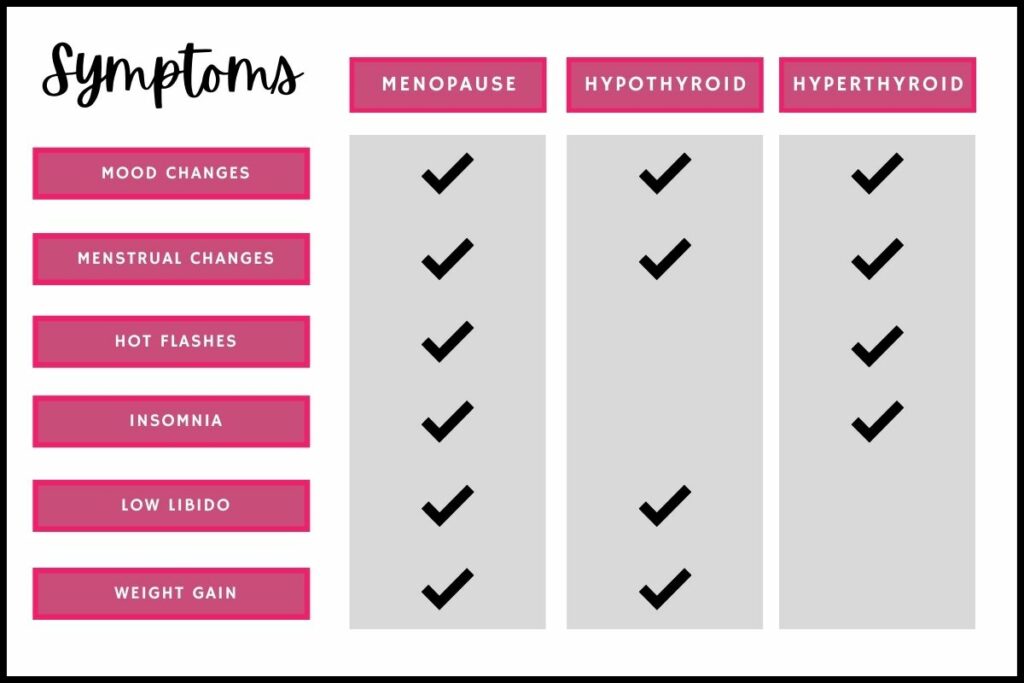 Many women mistake thyroid issues for menopause, or vice versa. Thyroid disorders can mimic many of the same symptoms of menopause.
Some symptoms of hypothyroid include:
- Fatigue
- Cold intolerance
- Dry skin
- Constipation
- Libido changes
- Menstruation changes
- Moodiness
- Forgetfulness
- Unexplained weight gain
- Hair loss
- Depression
Some symptoms of hyperthyroid include:
- Hot flashes
- Insomnia
- Heat intolerance
- Unexplained weight loss
|
- Racing heart
Heart palpitations
Anxiety
Muscle weakness
|
You may have noticed when reading those lists that both hyperthyroid and hypothyroid have similar symptoms to menopause, namely mood changes, menstrual changes, hot flashes, insomnia, and libido changes. Many women also experience weight gain around the time of menopause, which is common for people with hypothyroid. Therefore, it may be easy to mistake symptoms of thyroid disorders for menopause.
In addition, thyroid disorders may make your menopause symptoms worse. In some cases, you may need to treat both your thyroid disease and your low hormone levels from menopause to alleviate your symptoms.
Any time you experience symptoms like temperature intolerances, hot flashes, mood changes, unexplained weight changes, or other similar symptoms, it helps to talk to your women’s health care provider. Our team can help find underlying causes of your symptoms and identify personalized treatment options that suit your lifestyle.
Talk about Risks of Thyroid Disease with Your Women’s Health Care Provider
Untreated thyroid disorders can cause major problems for your health. Thyroid disease can increase your risk for many other serious health conditions. For instance, hypothyroid can increase the risk for high cholesterol, heart disease, and depression. Hyperthyroid can also increase the risk for heart disease and may increase the risk for vision issues. One common side effect of untreated hyperthyroid is called Graves’ ophthalmopathy, which can cause eye pain, light sensitivity, double vision, and even vision loss.
Thyroid disease of any kind can increase the risk for goiter, which is where the thyroid gland becomes enlarged, even to the point where you can feel the lump in your neck or experience symptoms like difficulty swallowing, cough, difficulty breathing, and hoarseness. Our doctors are here to help you reduce your risks for your overall health and well-being.
Thyroid issues can also make menopause health risks worse. For instance, osteoporosis is a serious risk for women after menopause. Osteoporosis is where your bones become weaker and more brittle, increasing the risk for fractures. Both hyperthyroid and hypothyroid can also increase the risk for osteoporosis, making it a double whammy if you have a thyroid disorder and are menopausal. Our women’s health care providers can discuss options to help protect your bones and reduce the risks based on your specific circumstances.
Quality Health Care from HerKare – Your Women’s Health Clinic
When you need better healthcare for women, choose our team at HerKare. We are a women’s health clinic founded by and run by women, for women. We pride ourselves on offering personalized care for women. Our team offers a wide range of healthcare services, from annual exams to HRT for menopause and treatments for health conditions like thyroid disease. Our goal is to empower women to take care of themselves by making healthcare as efficient and convenient as possible. Make an appointment today to take charge of your health.